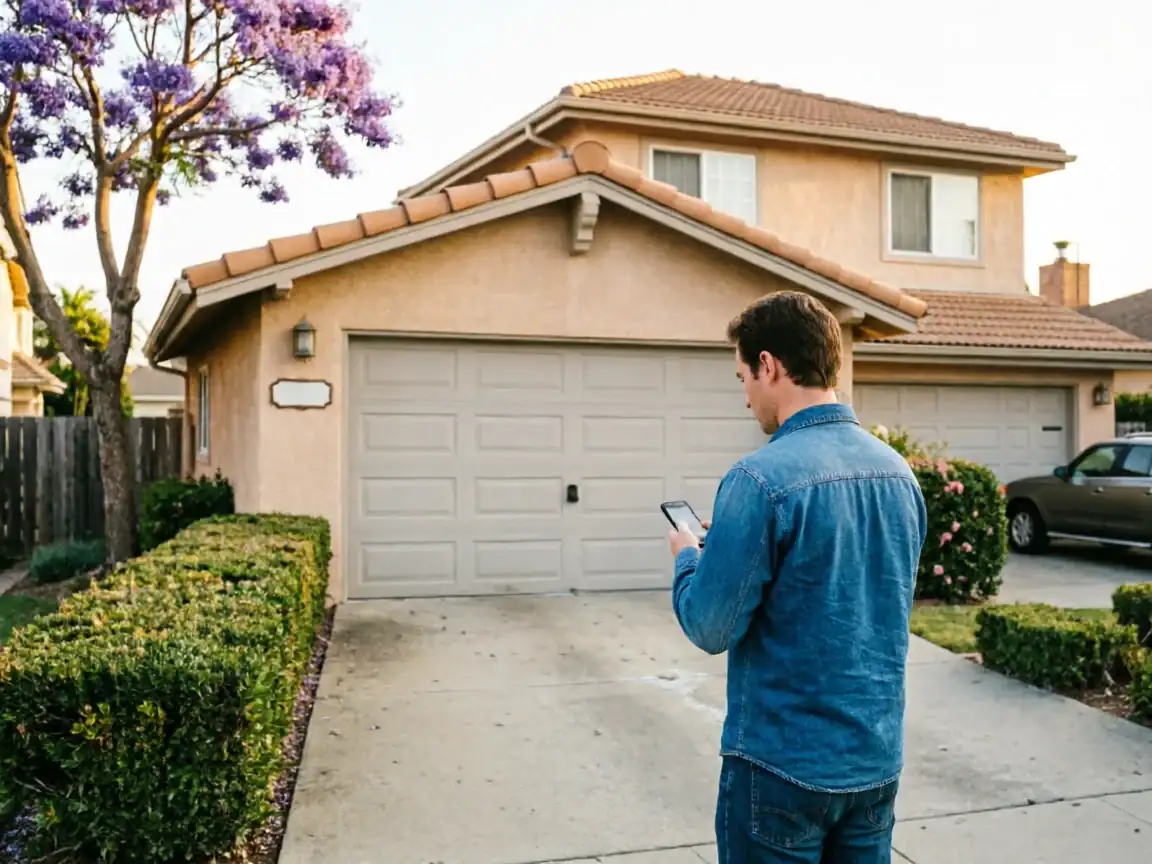
The Symptom
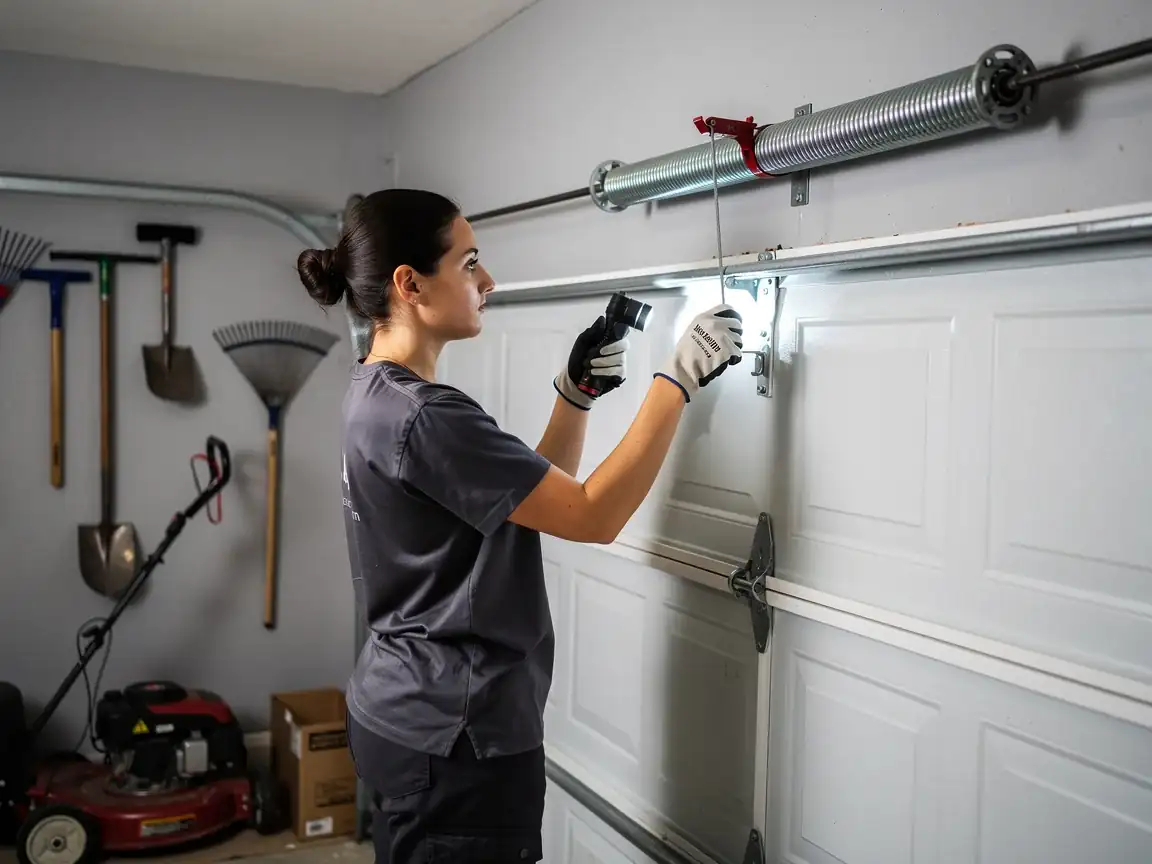
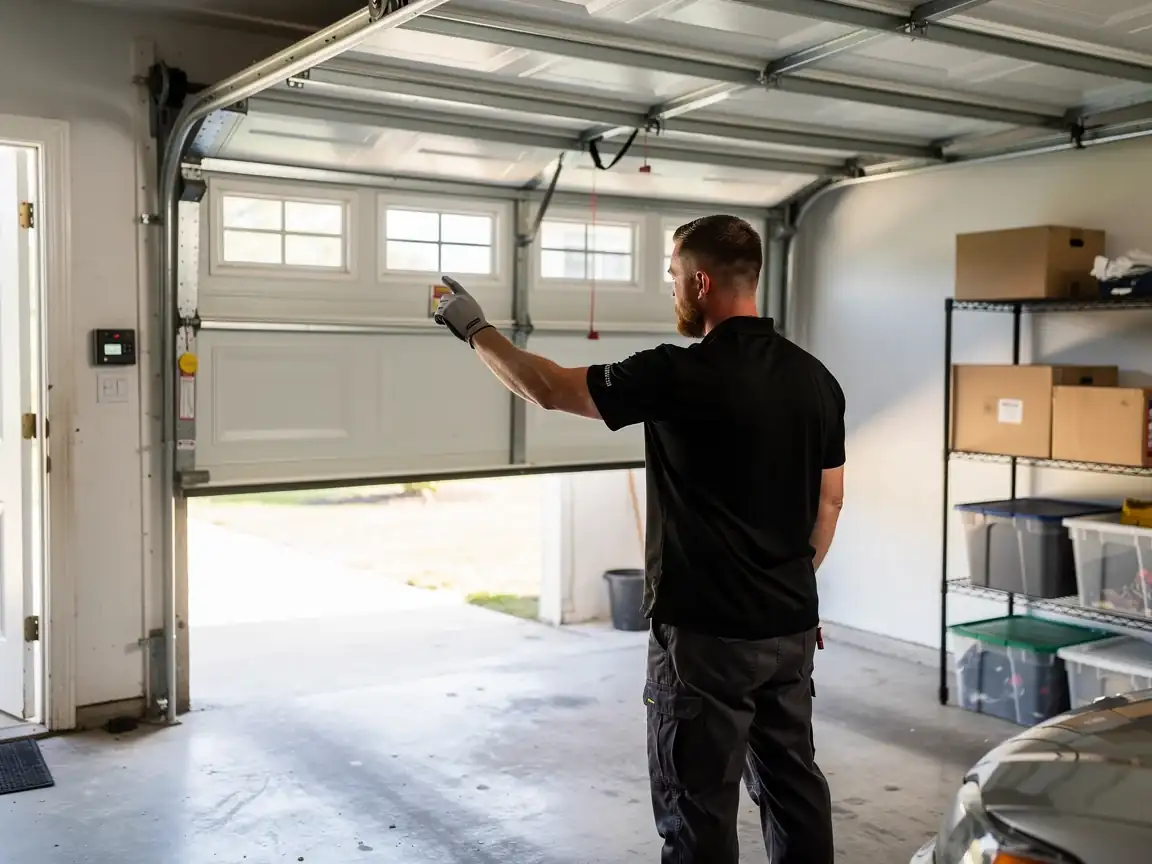
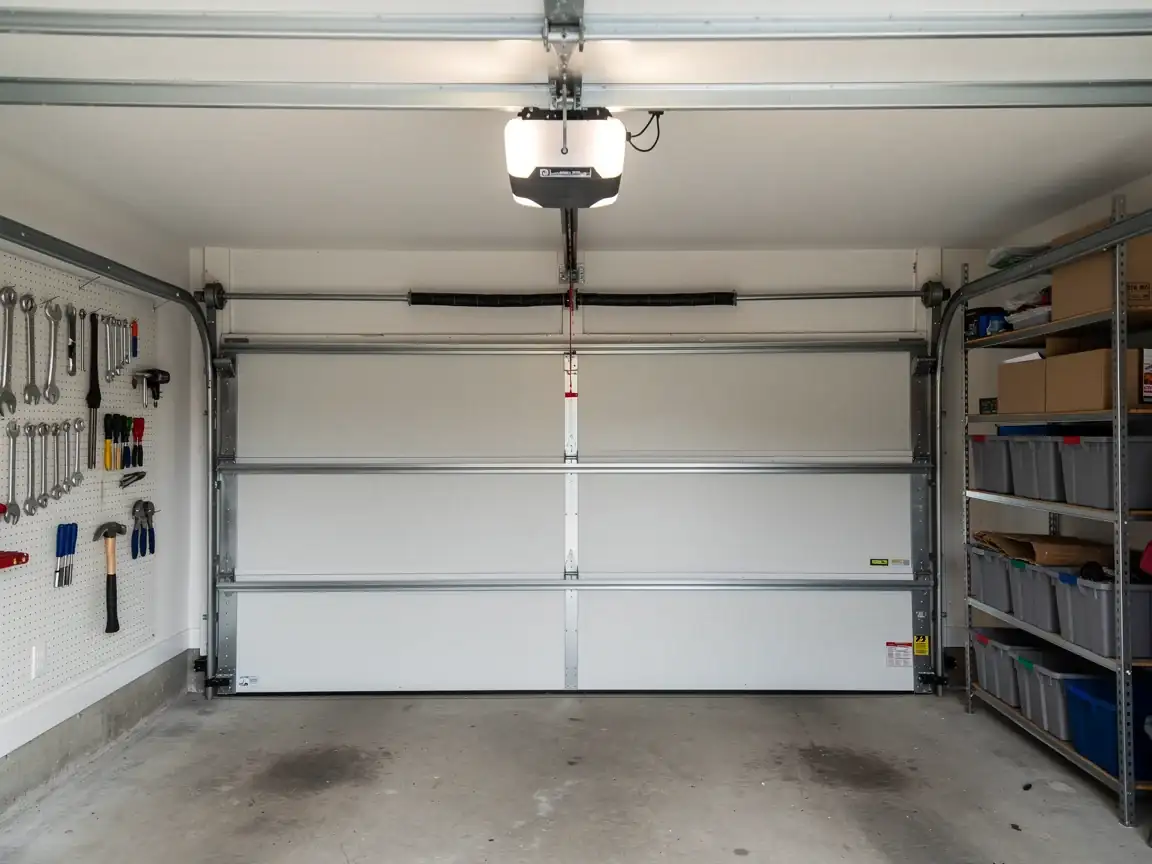
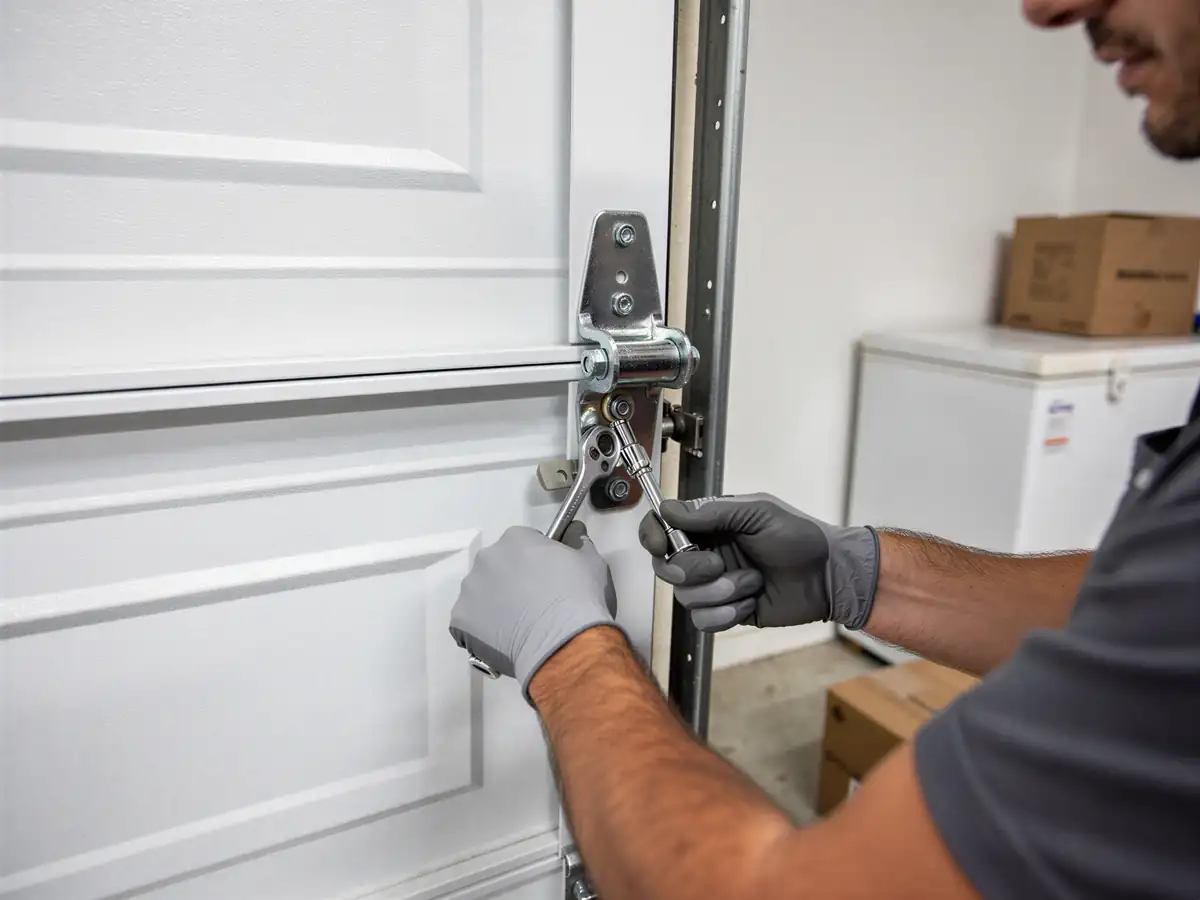
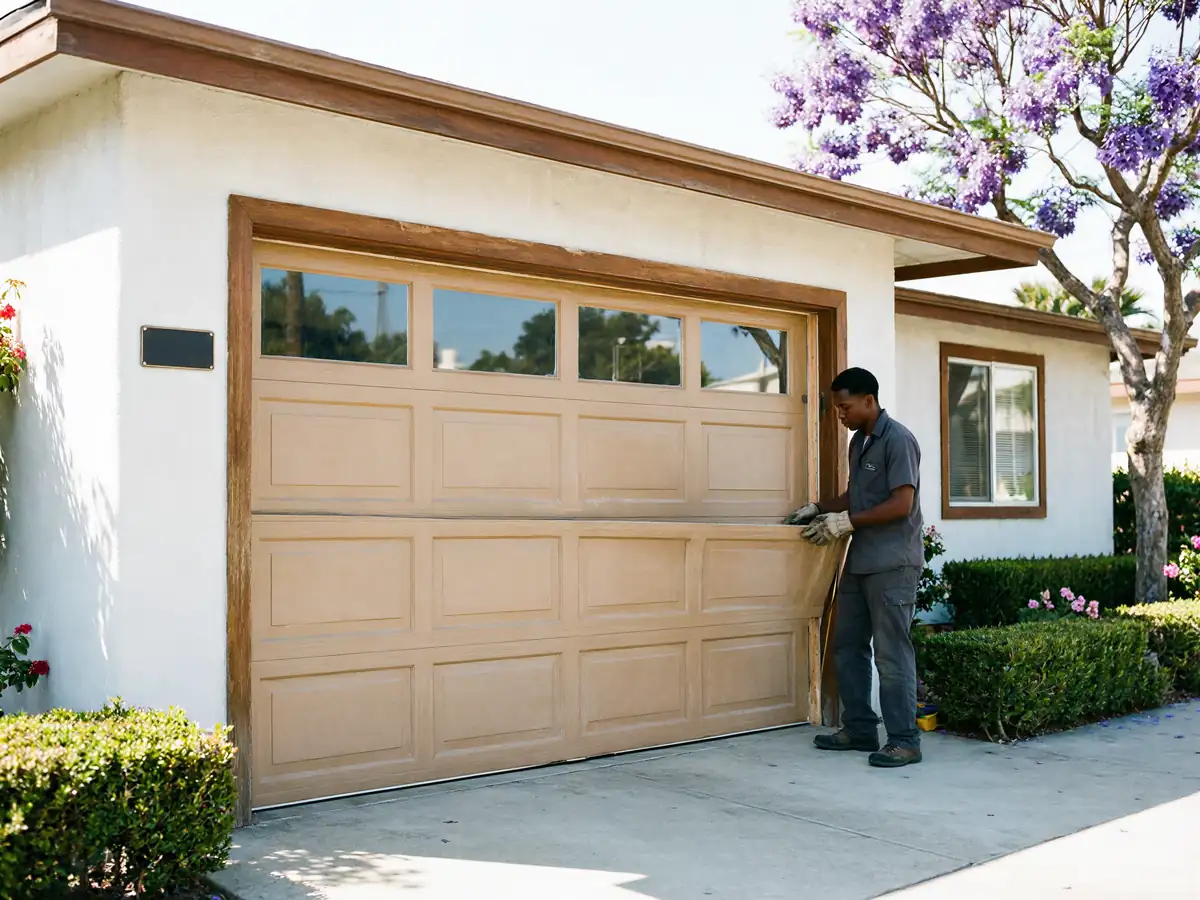
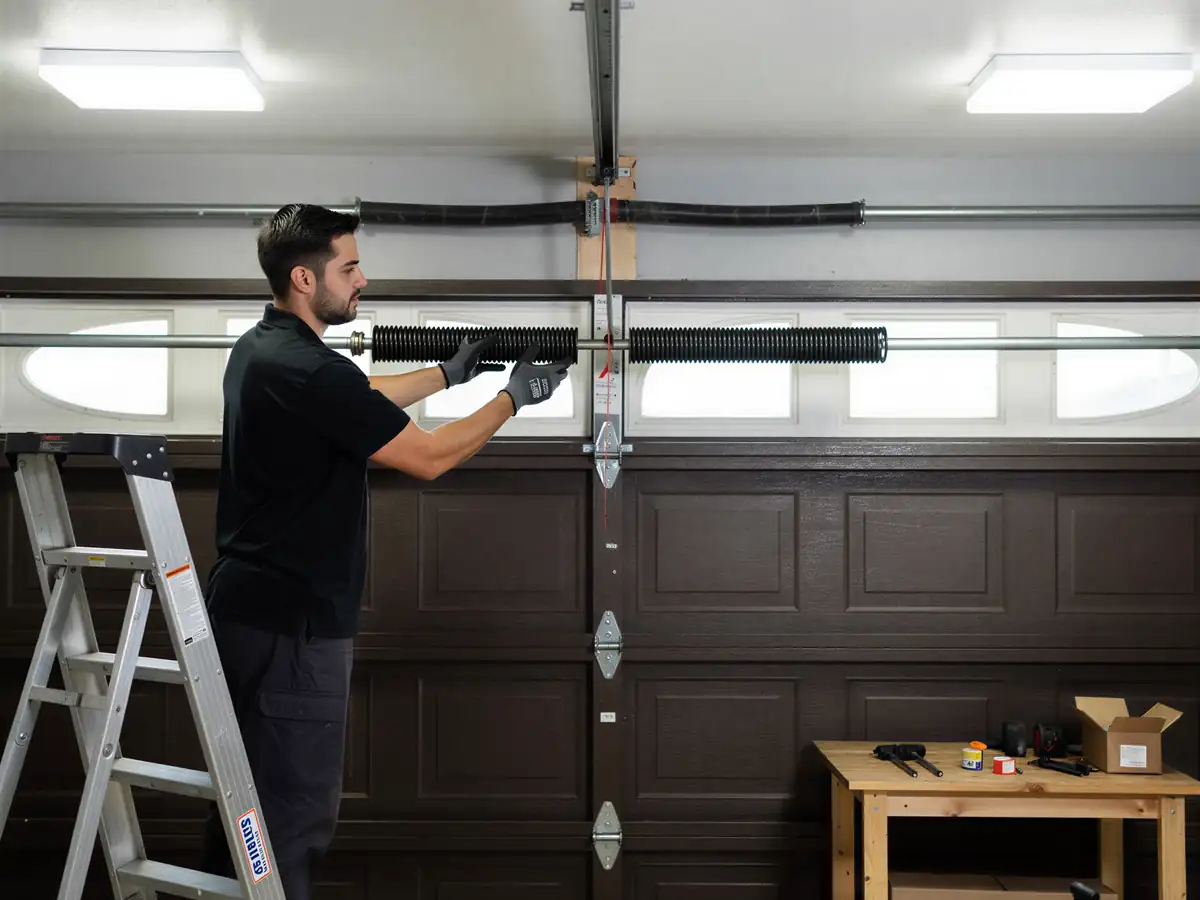
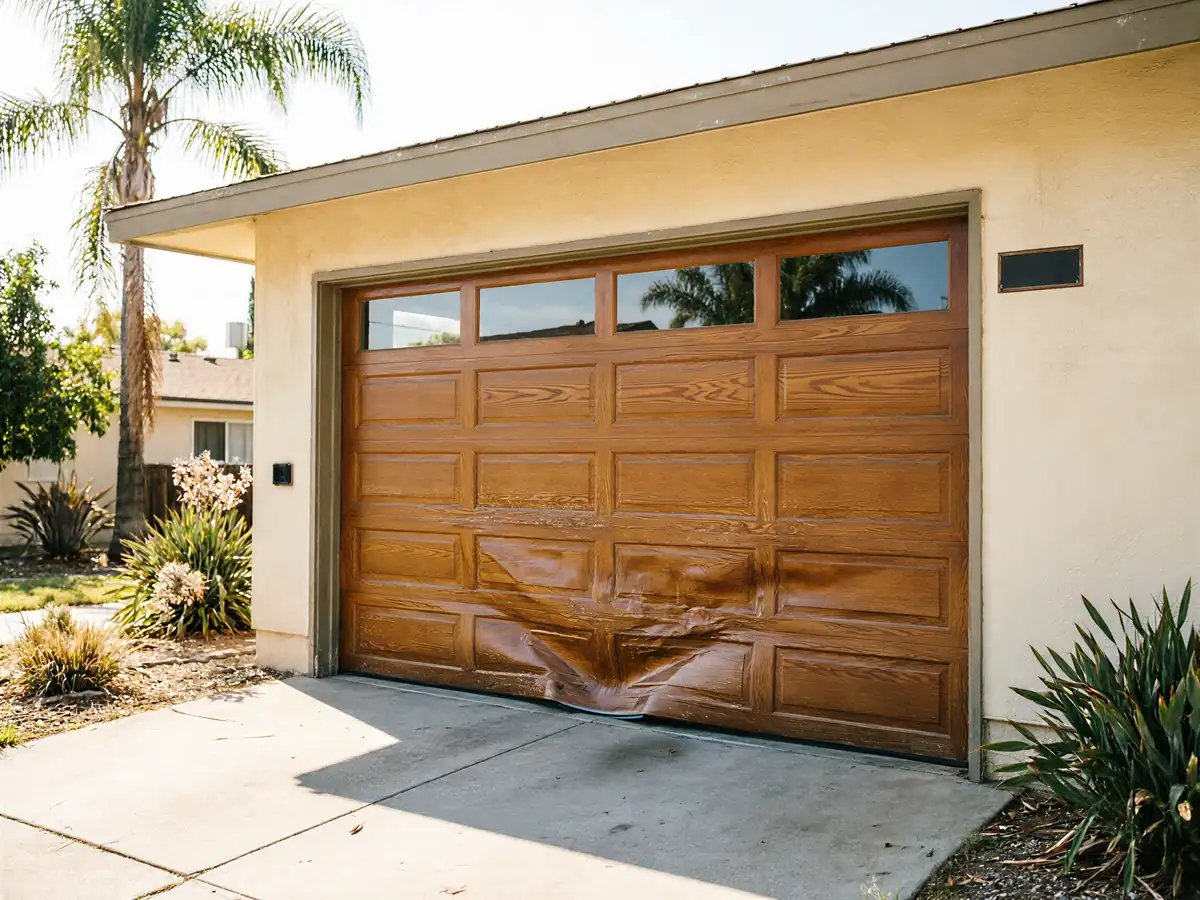
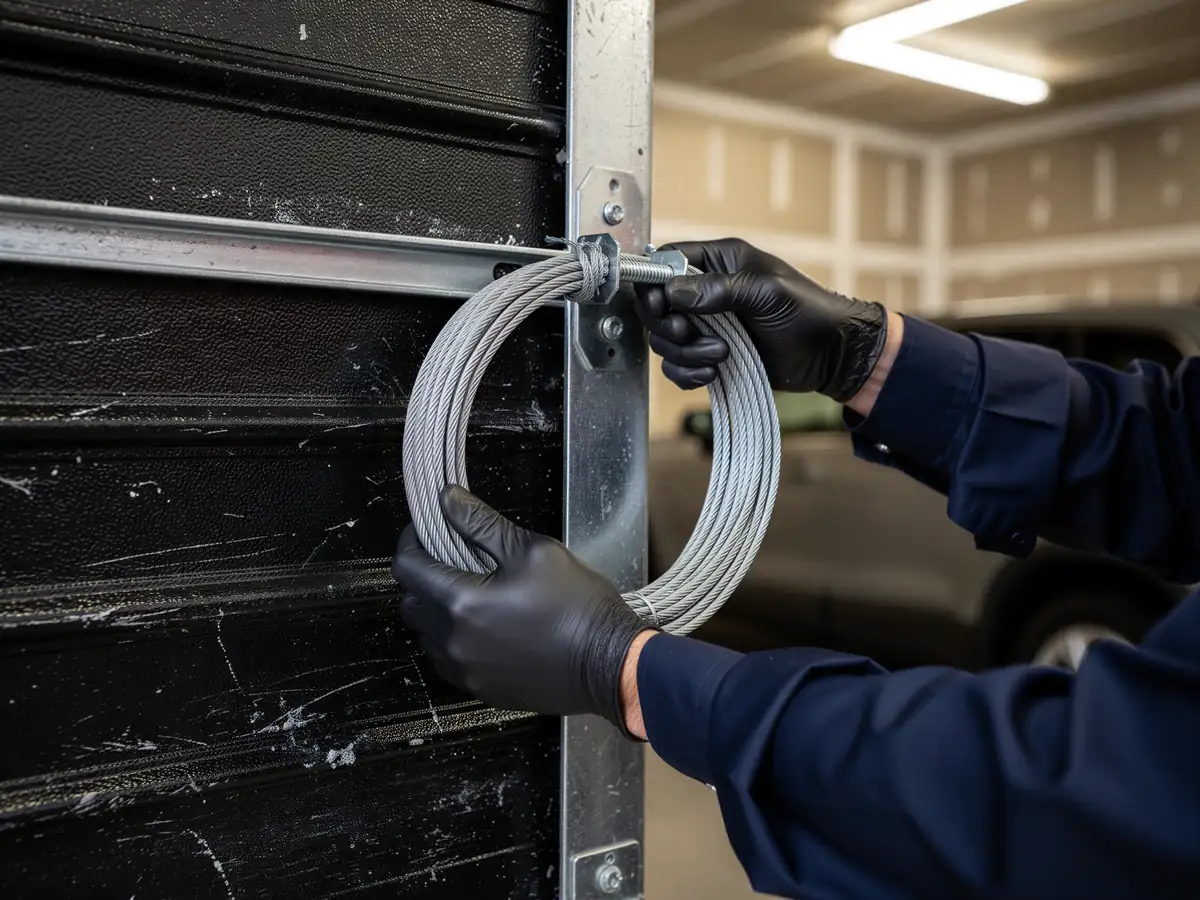
Most garage doors in Casa de Oro-Mount Helix are steel sectional doors on a standard 16-by-7 two-car opening, hung the way builders hung them when this part of the neighborhood went up around 1969: galvanized lift cables running off a stamped drum at each end of the torsion shaft, no cable drum covers, no safety loop through the bottom bracket the way newer doors have. When one of those cables frays or lets go, the door drops hard and sits crooked in the track, usually heavier on the side where the cable broke. You'll hear a bang, sometimes a snap you can pinpoint, and then the door won't lift at all or it binds halfway up. On these original drum setups, the fix almost always means replacing both cables as a pair, not just the one that failed - the other side is the same age and under the same load, and it's close behind.
Why It Happens Here
A door built around 1969 has had five decades of cable cycling, and in Casa de Oro-Mount Helix that cable has done its work in a mild temperate climate without the freeze-thaw stress some other regions get. That's the good news - rust-through failure is less common here than in wetter, colder places. What gets these cables instead is straight fatigue: thousands of open-close cycles on the original galvanized strand, plus sun exposure on south- and west-facing doors that dries out the factory lubricant faster than people expect. Once that coating is gone, the strands wear against the drum groove and against each other until one gives. Houses on this side of the service area, three miles out from El Cajon, are old enough now that most haven't had the cables touched since the door went in - this is usually the first cable failure a homeowner here has ever had.
Can You Do This Yourself
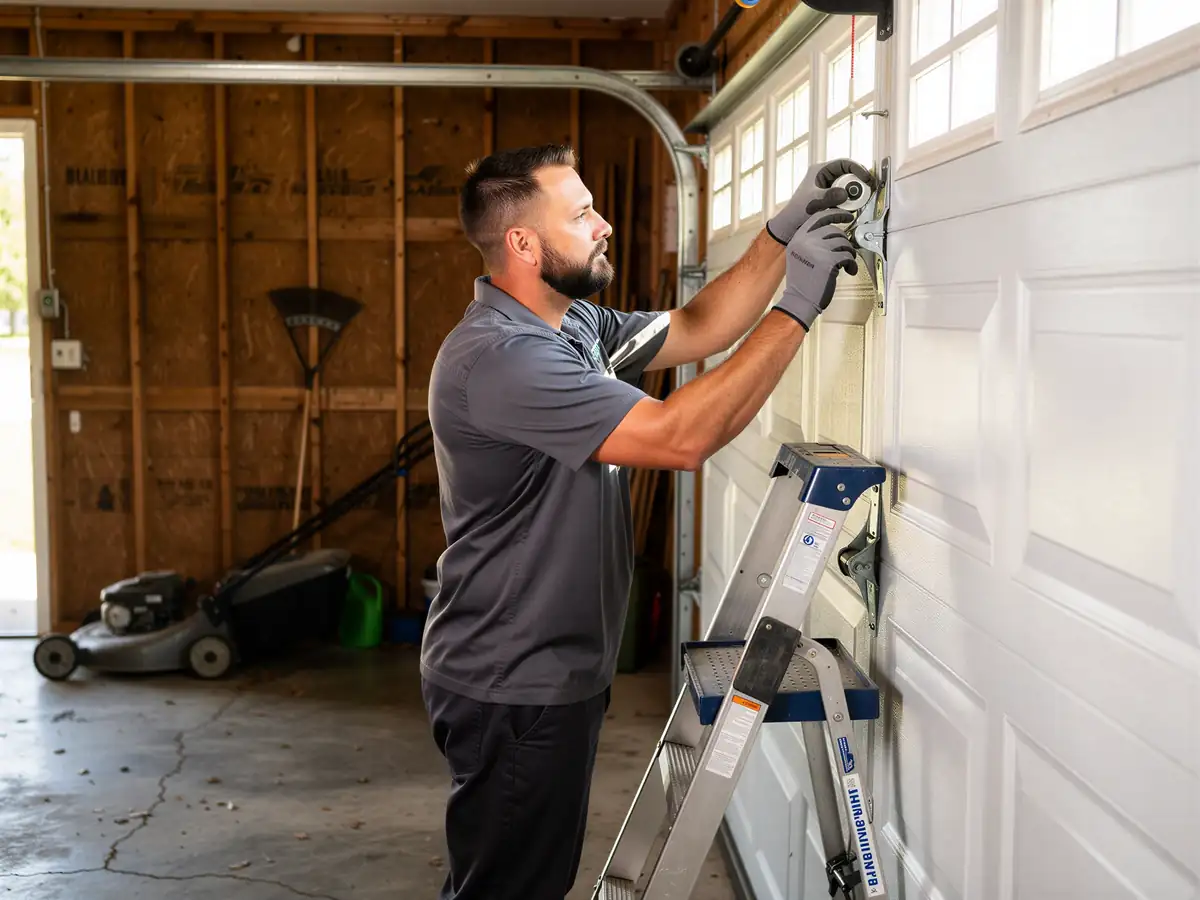
Don't. A broken lift cable means the door is held up by one side only, or by nothing, and the torsion spring on the shaft is still fully wound and under load. Reaching up to free a jammed panel, or trying to wind a new cable onto the drum by hand, is how people lose fingers or get hit by a door that lets go the rest of the way. If the door is down and stuck, leave it down, unplug the opener so it can't try to cycle again, and keep the car inside if that's where it is - don't force anything to get it out. The one thing worth doing yourself is looking at the cable where it's visible near the bottom bracket; if you can see frayed strands, that tells us which side failed before we even arrive.