The Symptom
The door still opens, but it's not happy about it. You hear a grind where there used to be a smooth roll, the opener strains for an extra second before it catches, or the door drifts a little crooked as it comes down. None of that stops you from using the garage, which is exactly why most owners wait another six months before calling anyone.
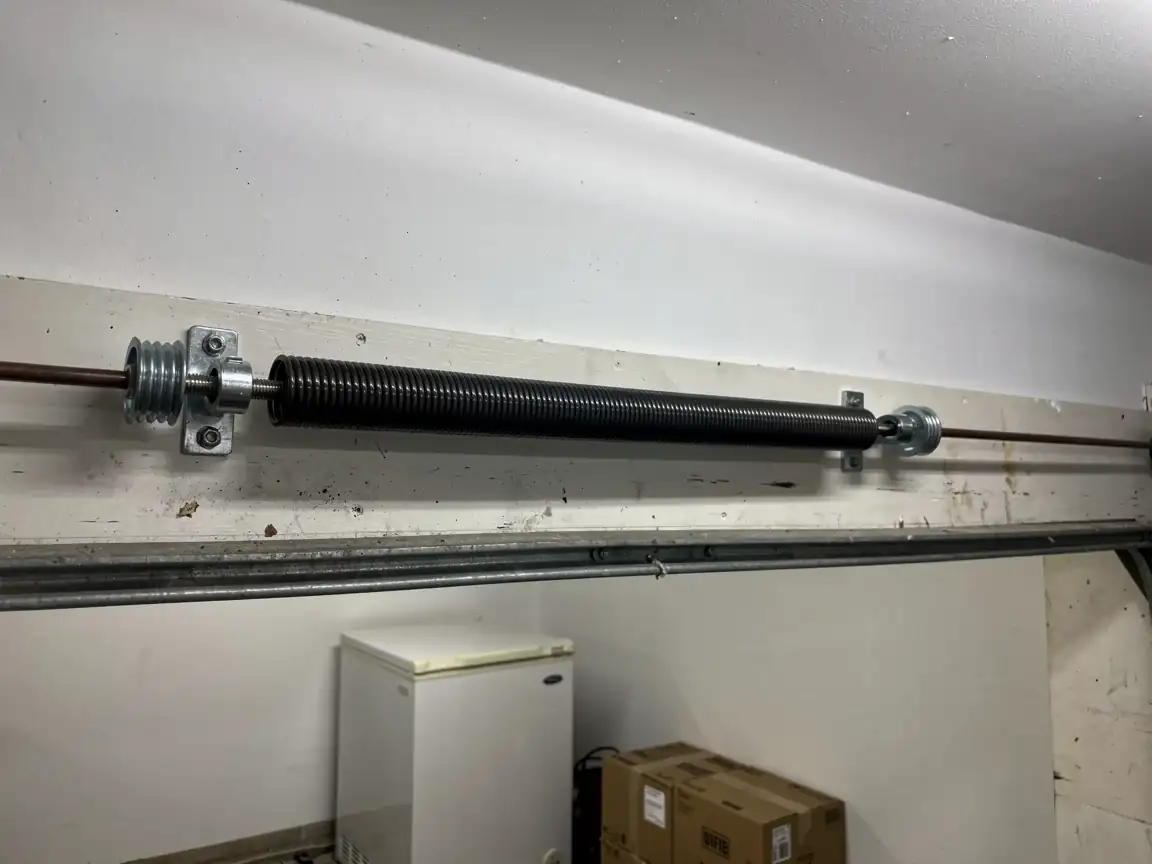
We see this pattern constantly across the service area: a door that works but complains. Rollers that have gone from round to slightly oval. A torsion spring that's lost enough tension that the opener is doing work it wasn't built to do. Hinges with play in them that didn't used to be there. Individually these are small. Together they're the reason a cable snaps or a spring lets go on a random Tuesday with no warning at all.
If you're noticing noise, slow response, or a door that seems to need a little help from the opener to get going, that's not a door asking to be ignored a while longer. That's the maintenance window, and it's narrower than people think.
Why It Happens Here
Housing in this service area went up mostly between 1967 and 1992, with a median build year of 1975. That's not ancient, but it means a huge share of the doors and openers in the 22 named communities we cover - from Bostonia two miles out to places like Alpine twelve miles east - are running original or first-replacement hardware that's now pushing forty to fifty years of cycles.
The climate here doesn't help in the way people expect it to. This is a mild temperate band - no deep freeze, no heavy snow load, nothing that forces an owner to think about their garage door twice a year the way someone in a harsher climate might. That absence of weather stress is part of the problem: there's no seasonal reminder to check lubrication or spring tension, so hardware wears out on cycle count and age alone, quietly, with nothing dramatic to flag it.
Across 54,606 owner-occupied houses in this area, most built in that same mid-century window, a lot of torsion springs are reaching the end of their rated cycle life around the same calendar years. That's not a coincidence. It's a housing stock all aging on the same clock.
What the Fix Involves
A real maintenance visit isn't a squirt of WD-40 and a wave goodbye
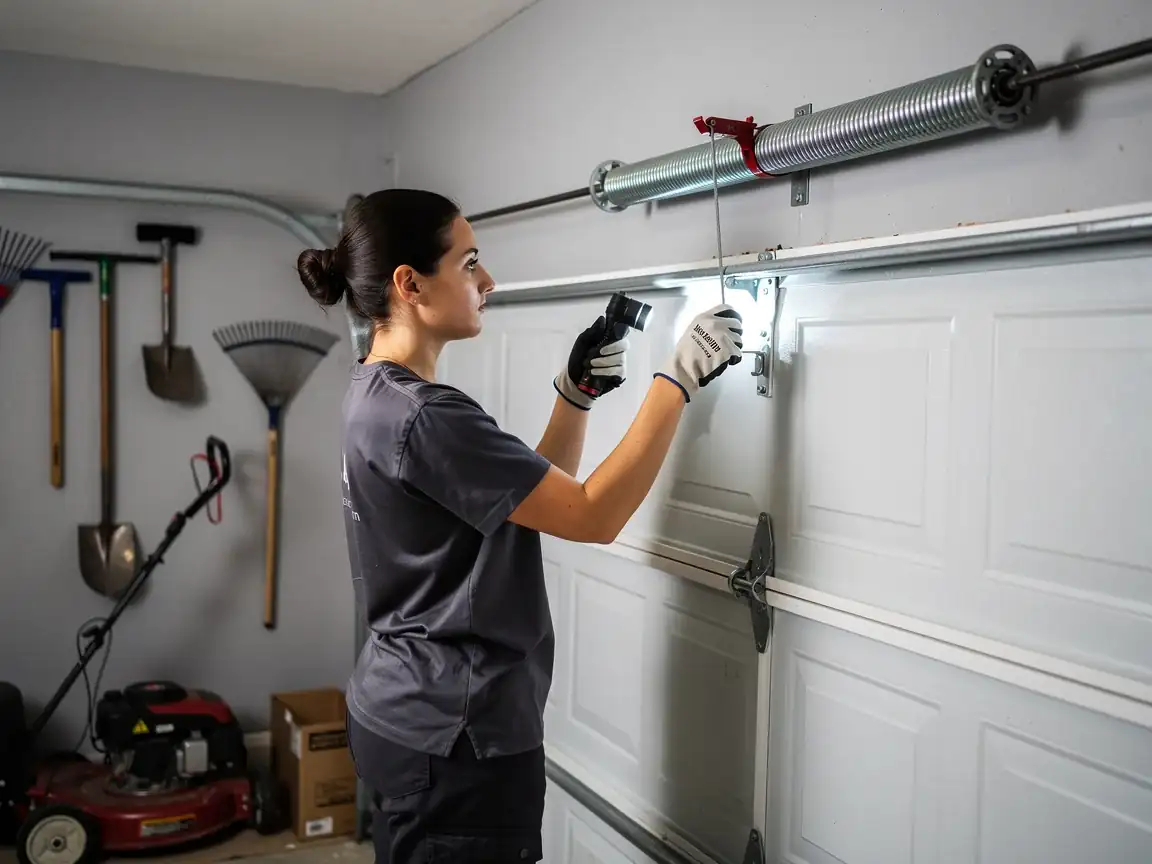
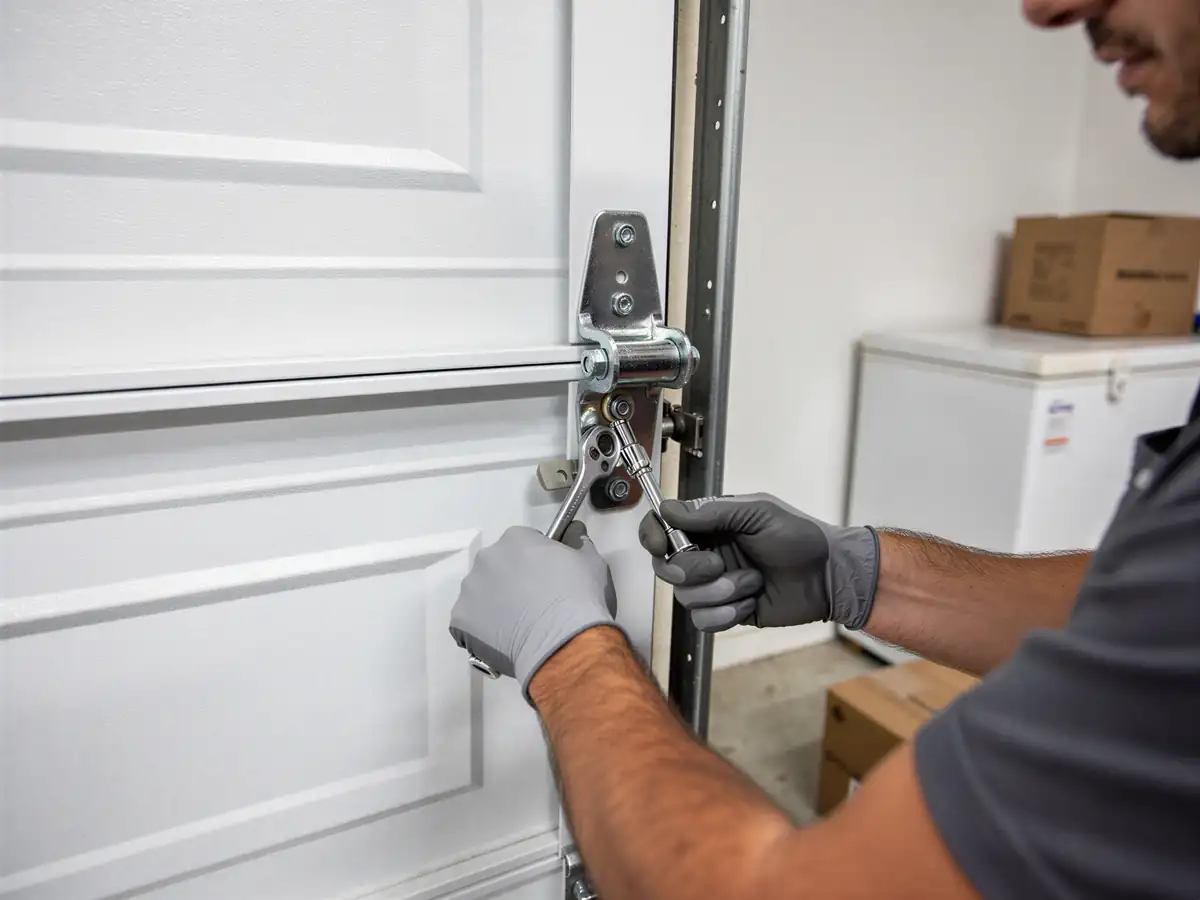
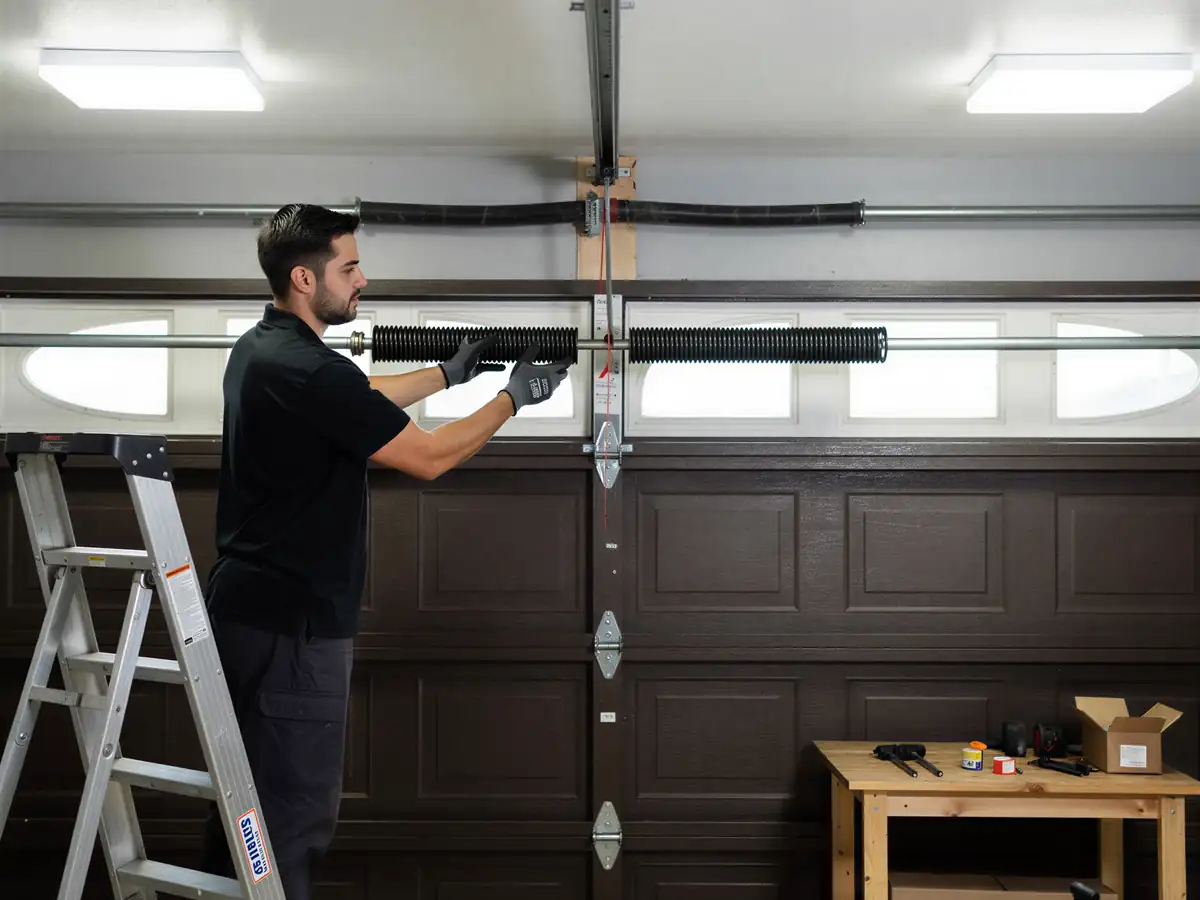
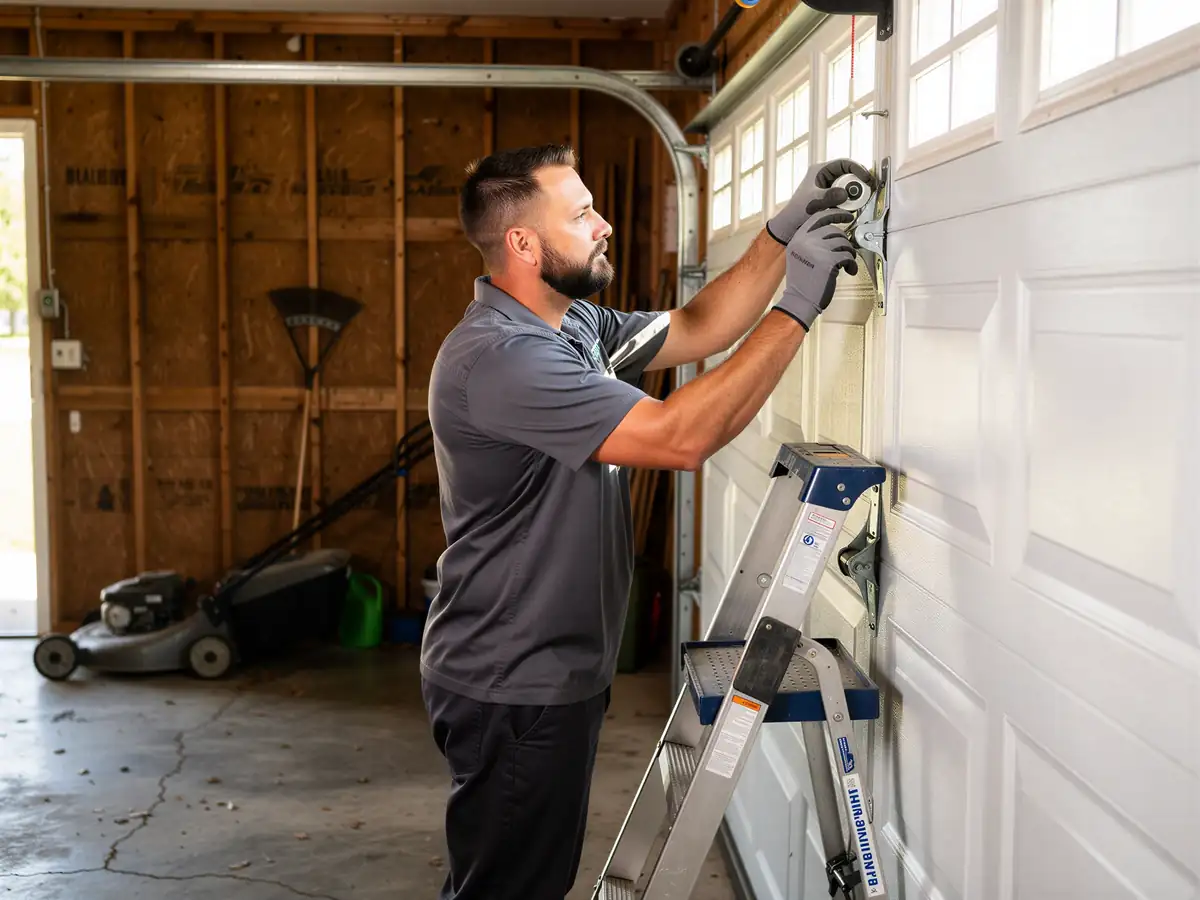
We check torsion spring tension against the door weight it's actually lifting, since springs stretch and weaken unevenly over the decades. We inspect rollers and replace the ones that have worn from round to oval - those are what cause the grinding sound and the crooked travel. We check track alignment, since a track that's drifted even an eighth of an inch out of plumb makes the opener work harder on every single cycle.
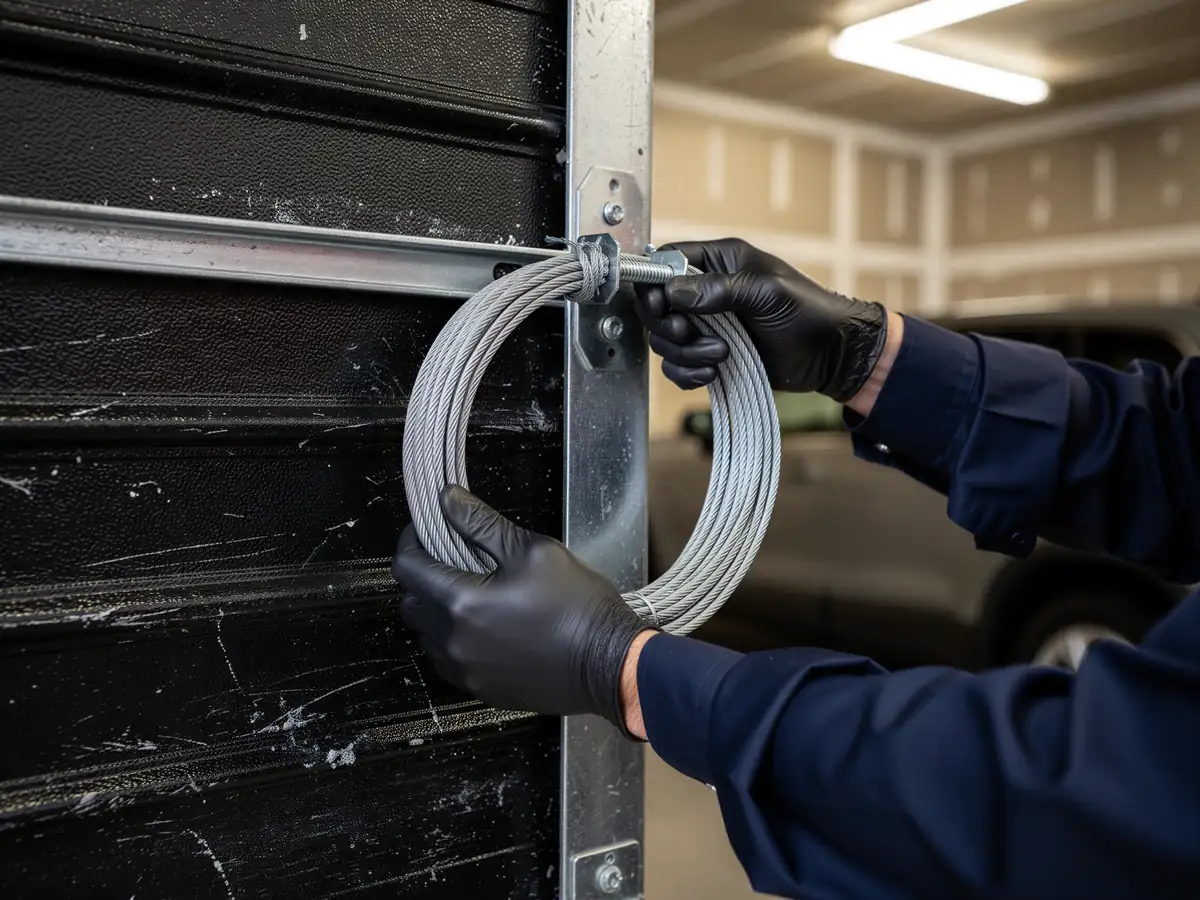
We also look at cable fray near the drum, hinge wear at the stress points
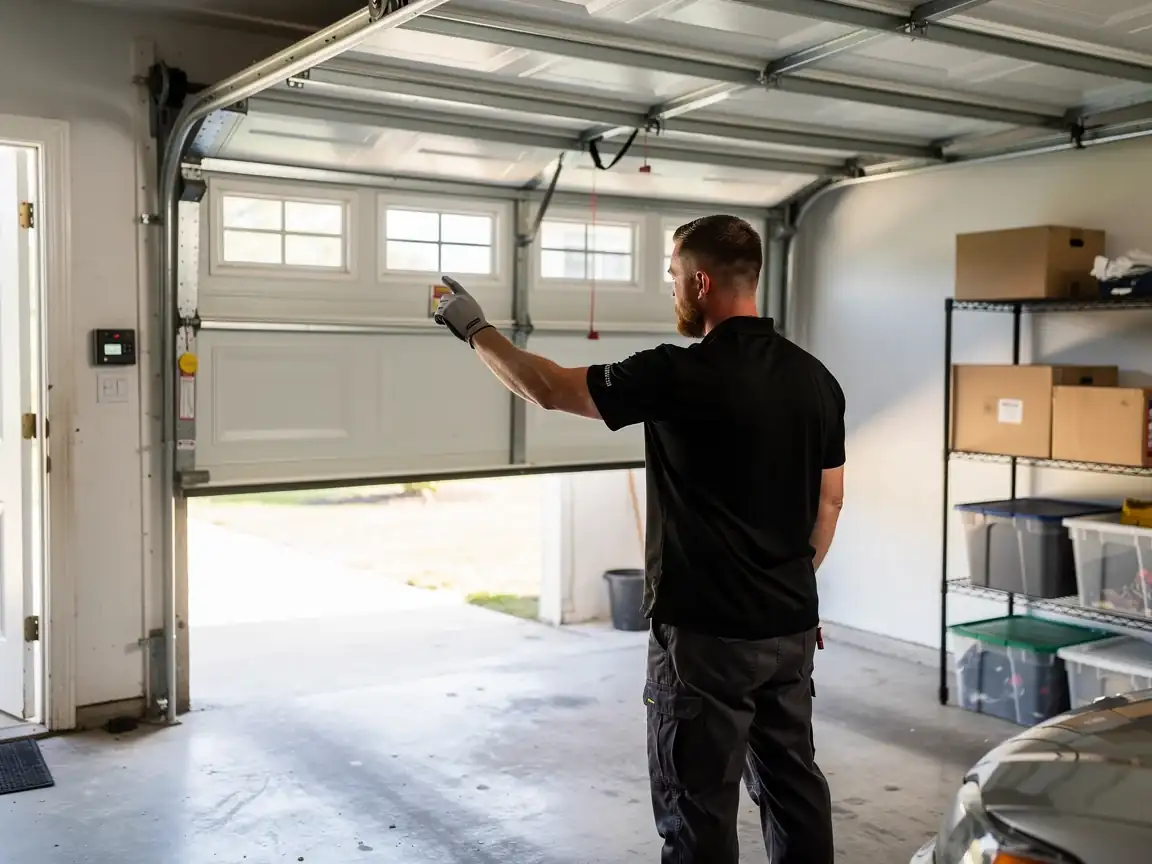
And the balance of the door itself - lift the door halfway by hand with the opener disconnected, and it should stay put. If it drops or shoots up, something's already off.
For doors from that 1967-1992 era specifically
We're often dealing with hardware that was built to a different standard than what's sold today, so parts matching can take longer than a same-day repair on newer equipment. That's a real limitation worth knowing going in, not something we gloss over to get the job booked.
Can You Do This Yourself
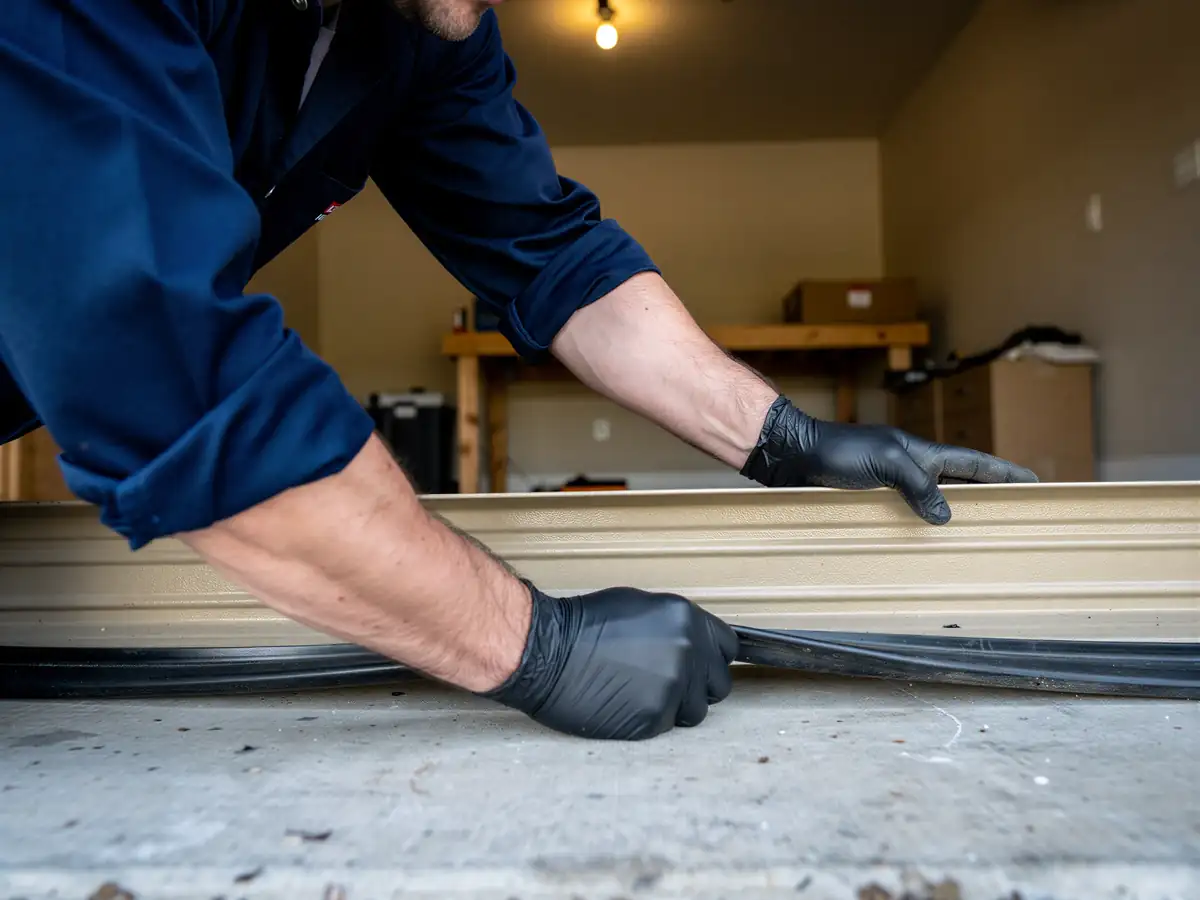
Some of this is genuinely fine to do yourself. Wipe down the tracks, lubricate the rollers and hinges with the right product, and check that the weatherstripping at the bottom still seals. That's maintenance any owner can handle with a ladder and twenty minutes.
Spring tension is not that job. A torsion spring under load holds enough stored energy to cause serious injury if it lets go while you're adjusting it, and on the older hardware common across this area, the winding cones and bar fittings don't always match what's sold in a hardware store kit today. If your door is sagging unevenly, if the opener strains before it moves the door, or if you hear a loud bang from the garage followed by a door that won't budge, that's a call, not a project.