The Symptom
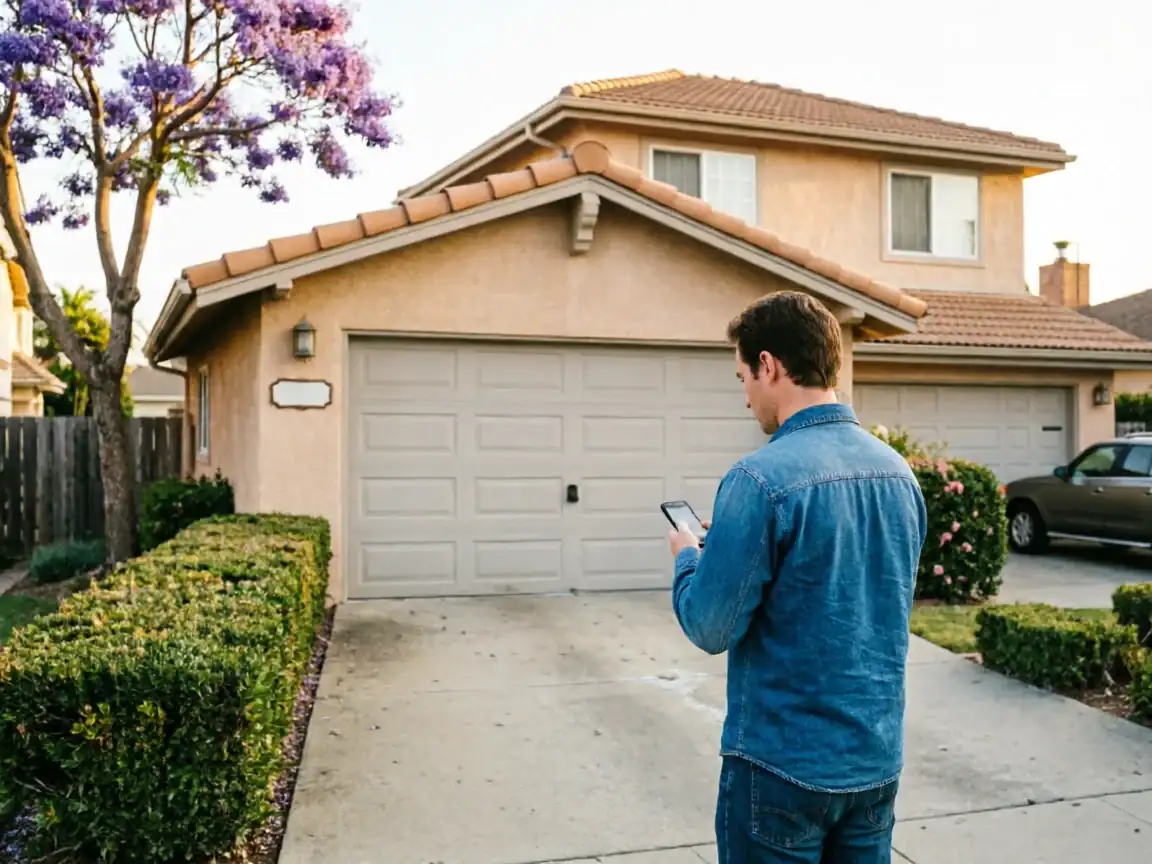
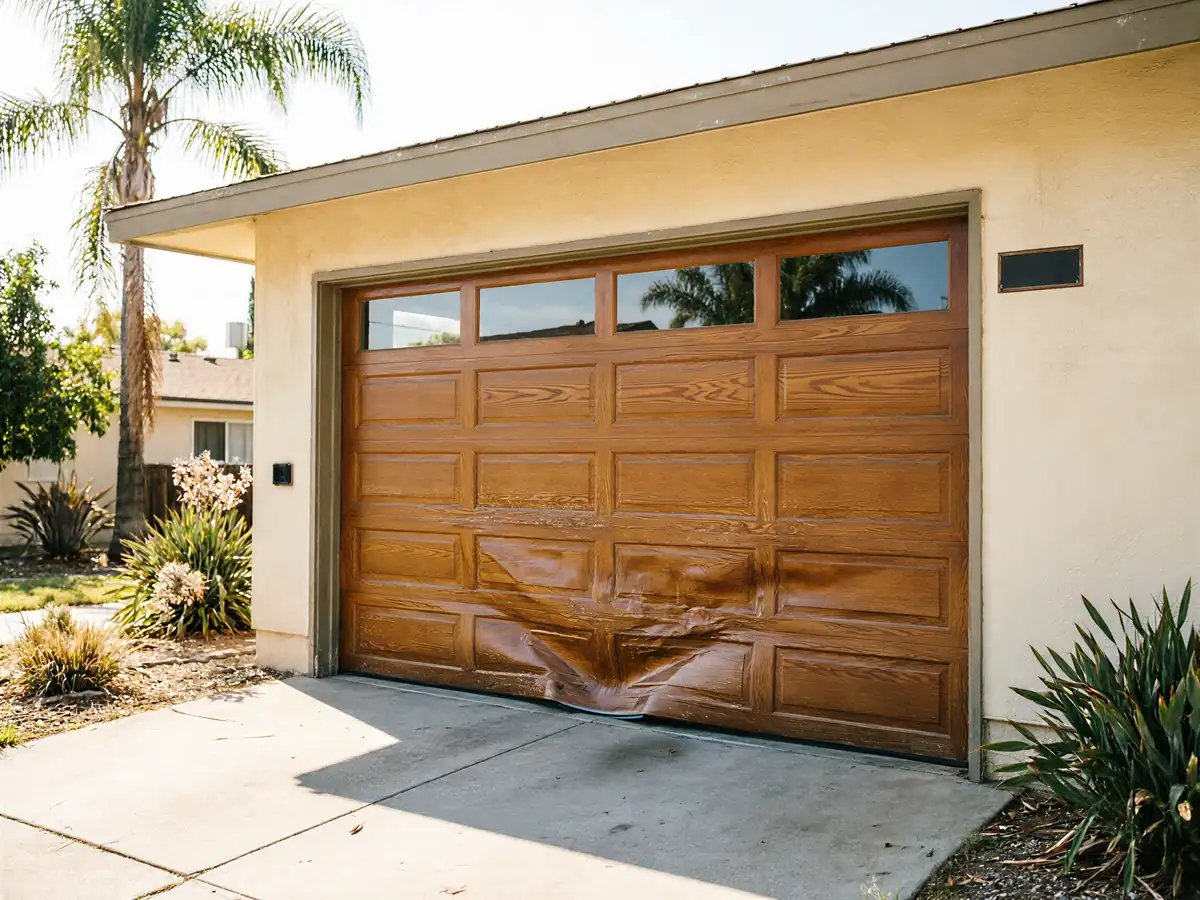
The door won't open past a foot or two, or it opens and then slams down the last few inches. Sometimes it's a loud bang from the garage followed by the door refusing to move at all - that's almost always a torsion spring letting go. Other times it's a slow slide into trouble: the door starts sagging on one side, the opener strains and grinds, or you hear a metallic pop every time it travels on the track.
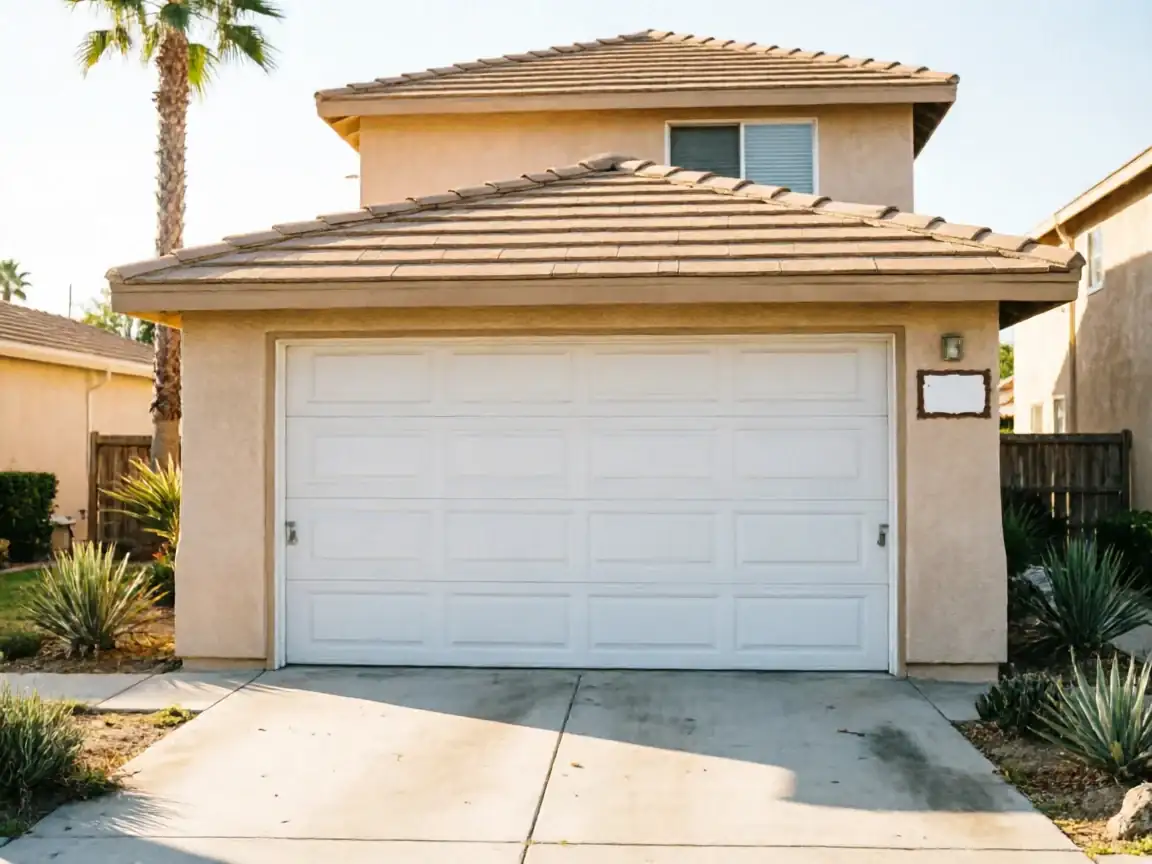
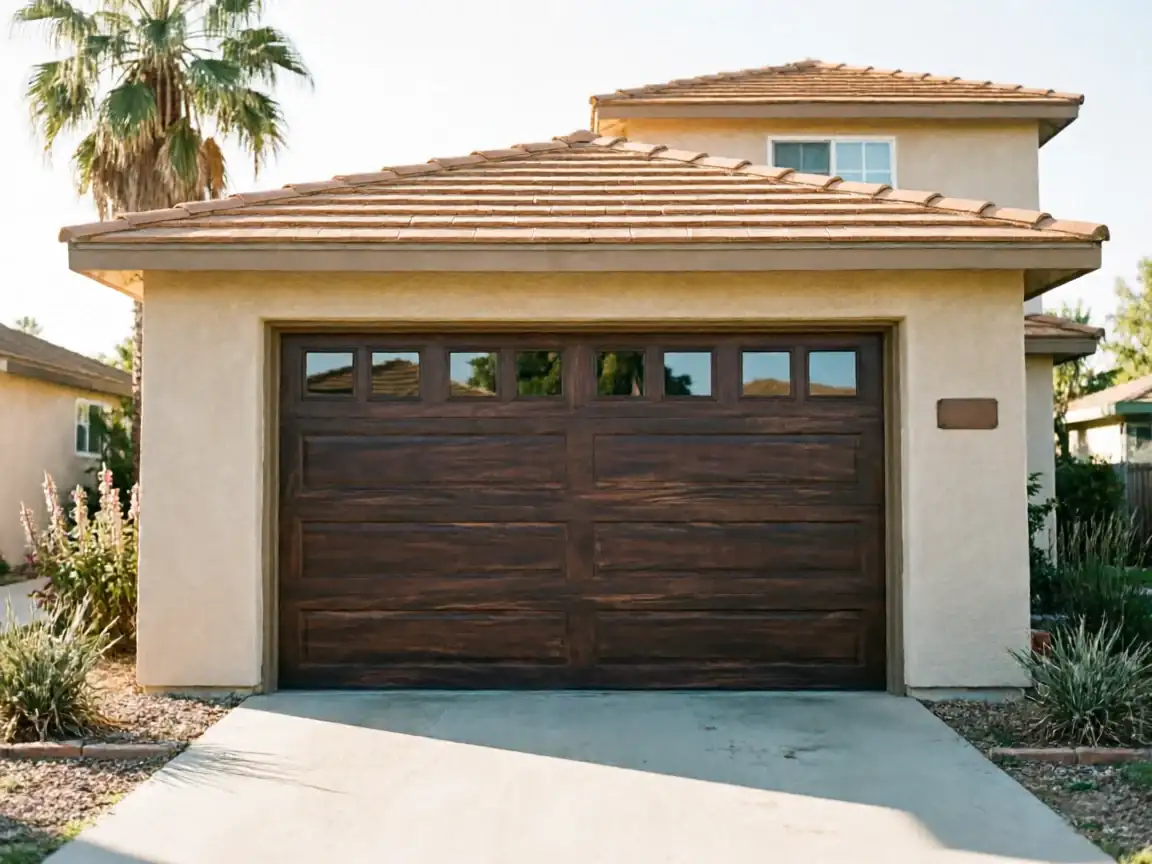
In El Cajon, a lot of these calls come from houses where the door and hardware are original or close to it. Given that most of the local stock went up between 1967 and 1992, with a median build year around 1975, we're often looking at torsion springs and track hardware that have simply run out of cycles - not a fluke, just age catching up with steel that's been winding and unwinding for decades.
If your door is dead silent and won't budge, don't force it with the opener. A spring under tension that's about to fail, or has already cracked, can do real damage to the door and to anyone standing near it.
Why It Happens Here
El Cajon sits in a mild temperate band - no hard freezes, no deep snow load, nothing that cracks a slab or warps a panel the way harsher climates do. That's the good news. The bad news is that mild and dry doesn't mean gentle on steel. Torsion springs here go through the same thousands of open-close cycles as anywhere, but without the cold-weather lubricant breakdown you'd see elsewhere, so a lot of owners assume the hardware is fine right up until it isn't. There's no obvious seasonal warning sign.
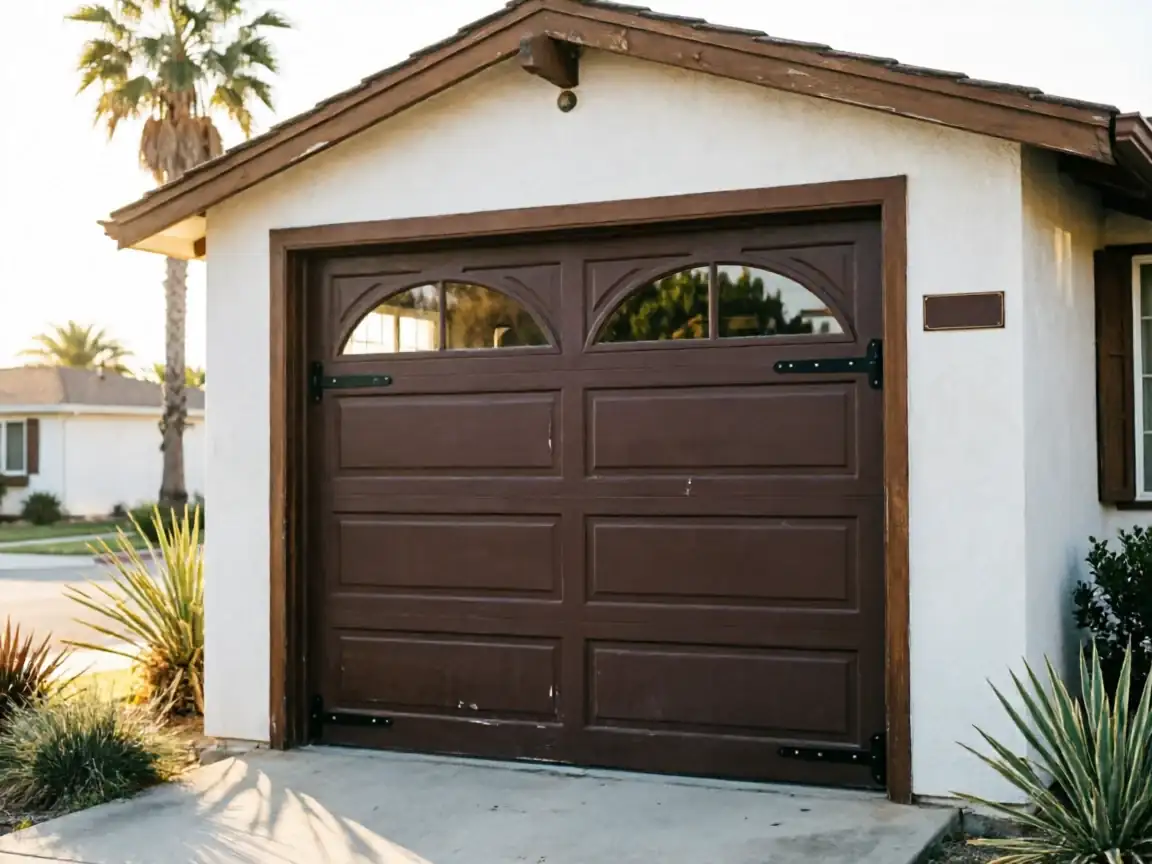
Across the 22 named areas that make up this part of the county - home to roughly 144,957 households and 54,606 owner-occupied houses - the housing stock is heavily 1960s and 1970s construction. That generation of garage doors was commonly built with side-mounted torsion hardware and lighter-gauge track than what gets installed today. Those parts were solid for their time, but they weren't designed to last fifty years, and a lot of suppliers don't stock direct replacements for them anymore.
So the pattern we see is less about weather and more about math: a spring rated for a certain number of cycles, installed in 1975, is going to fail sometime - and for a huge share of El Cajon's houses, that time is now.
What the Fix Involves
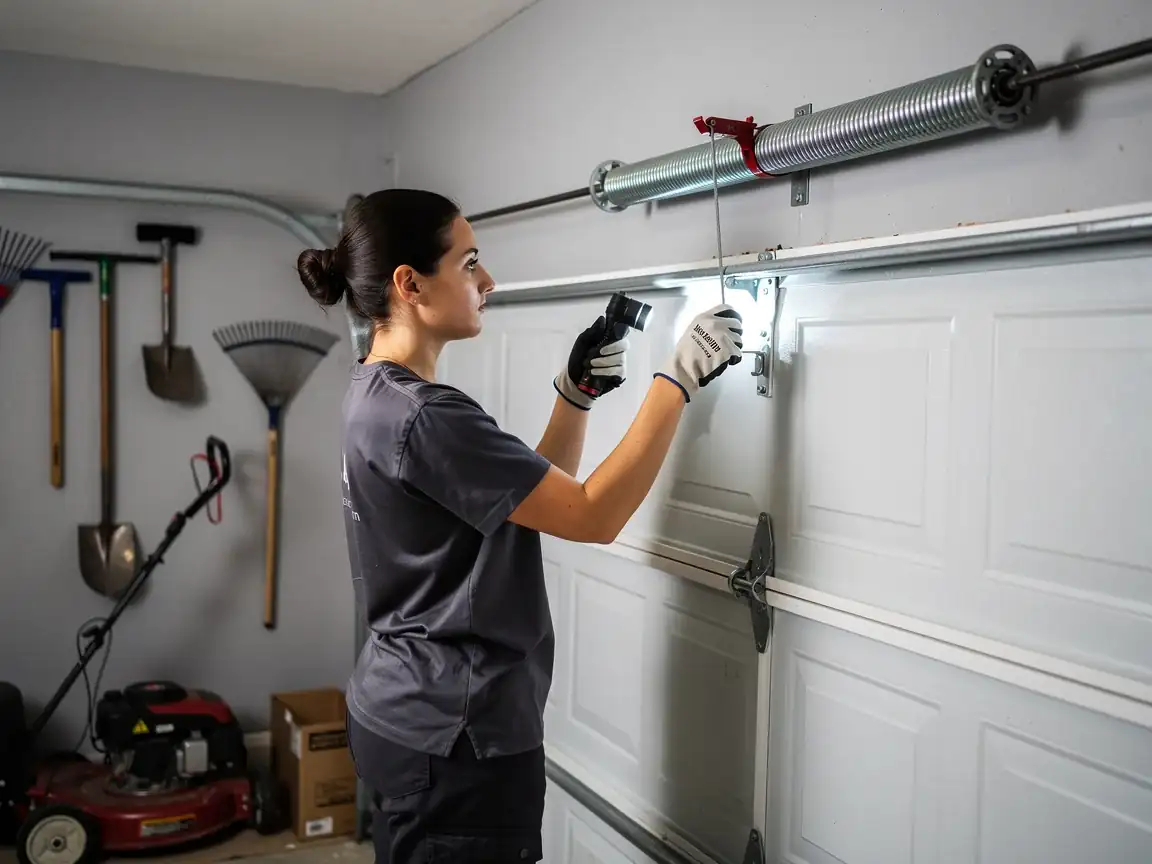
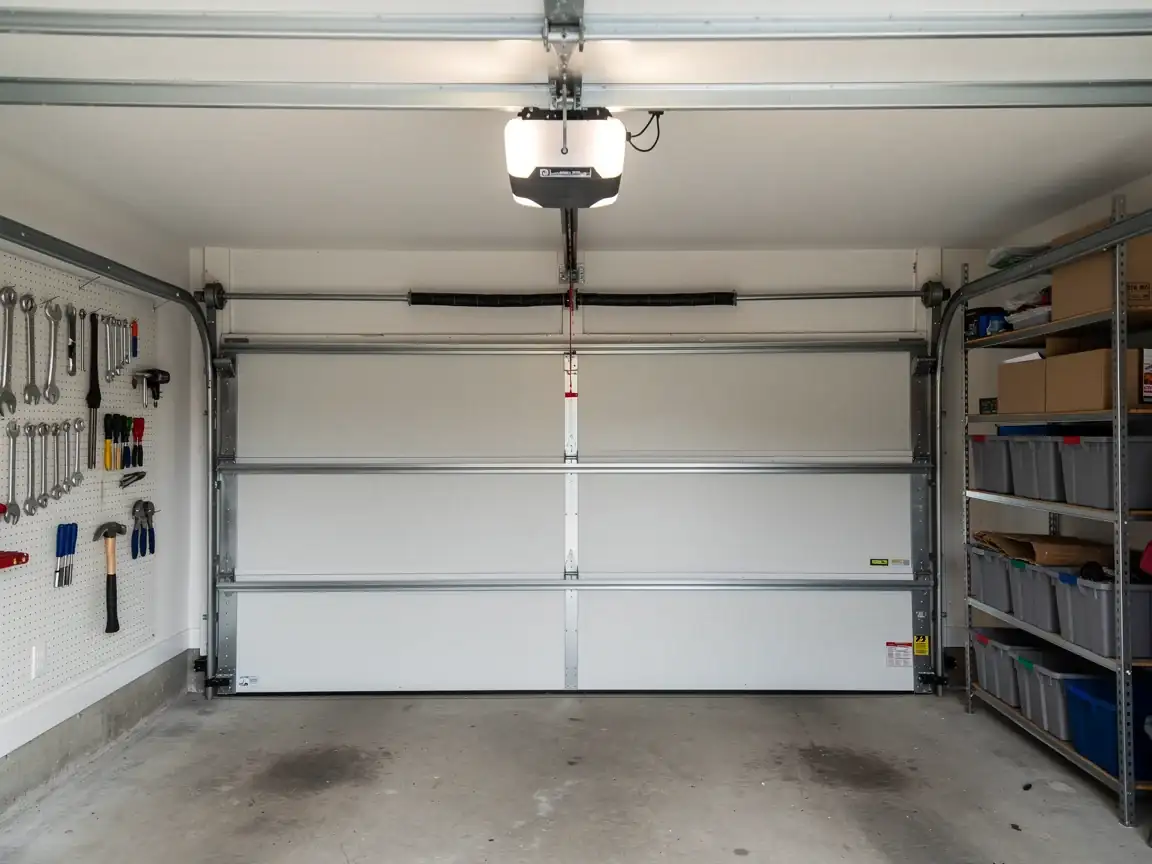
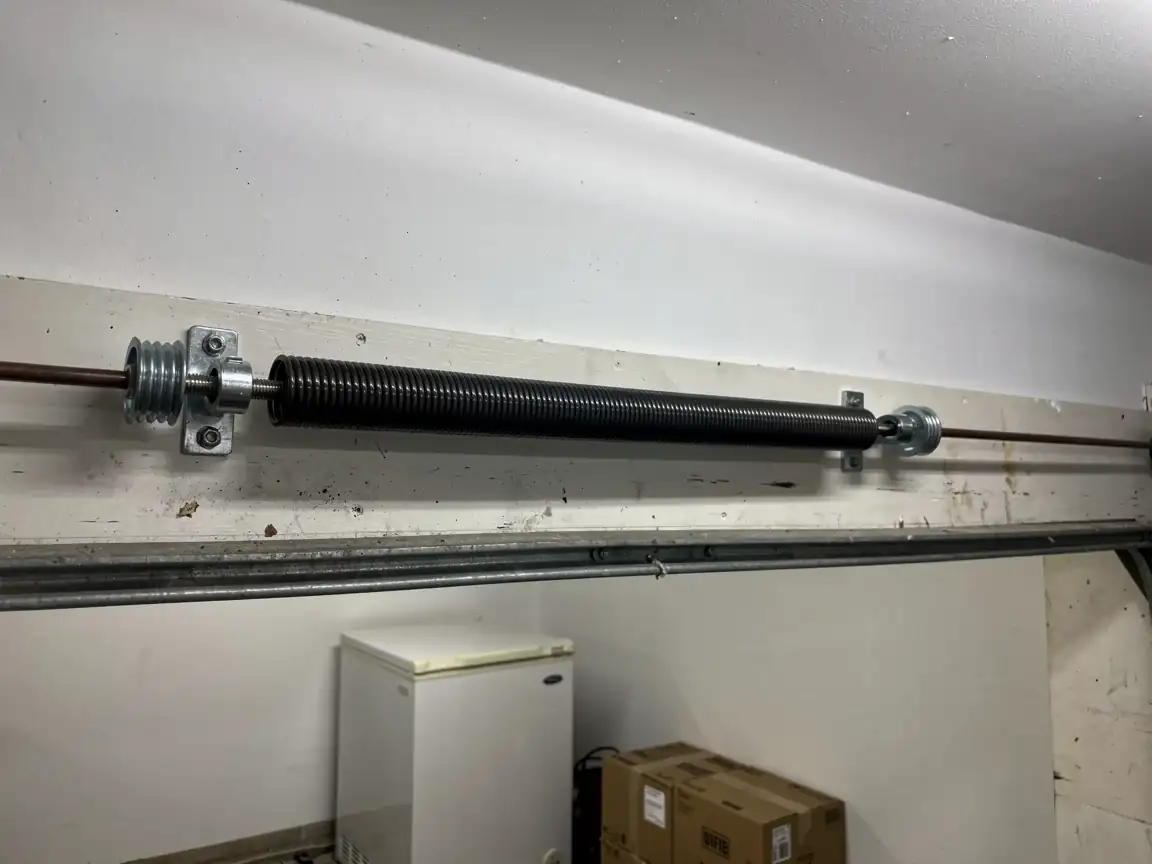
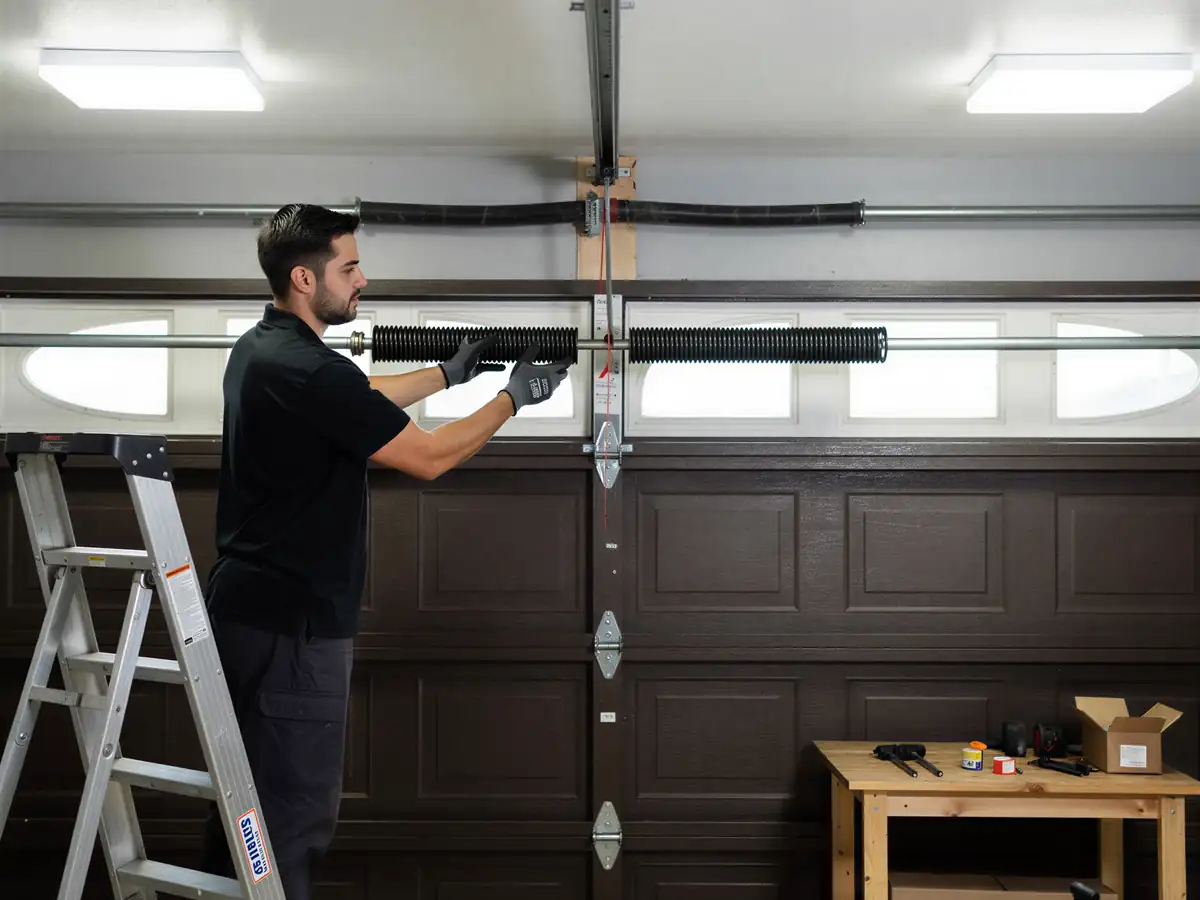
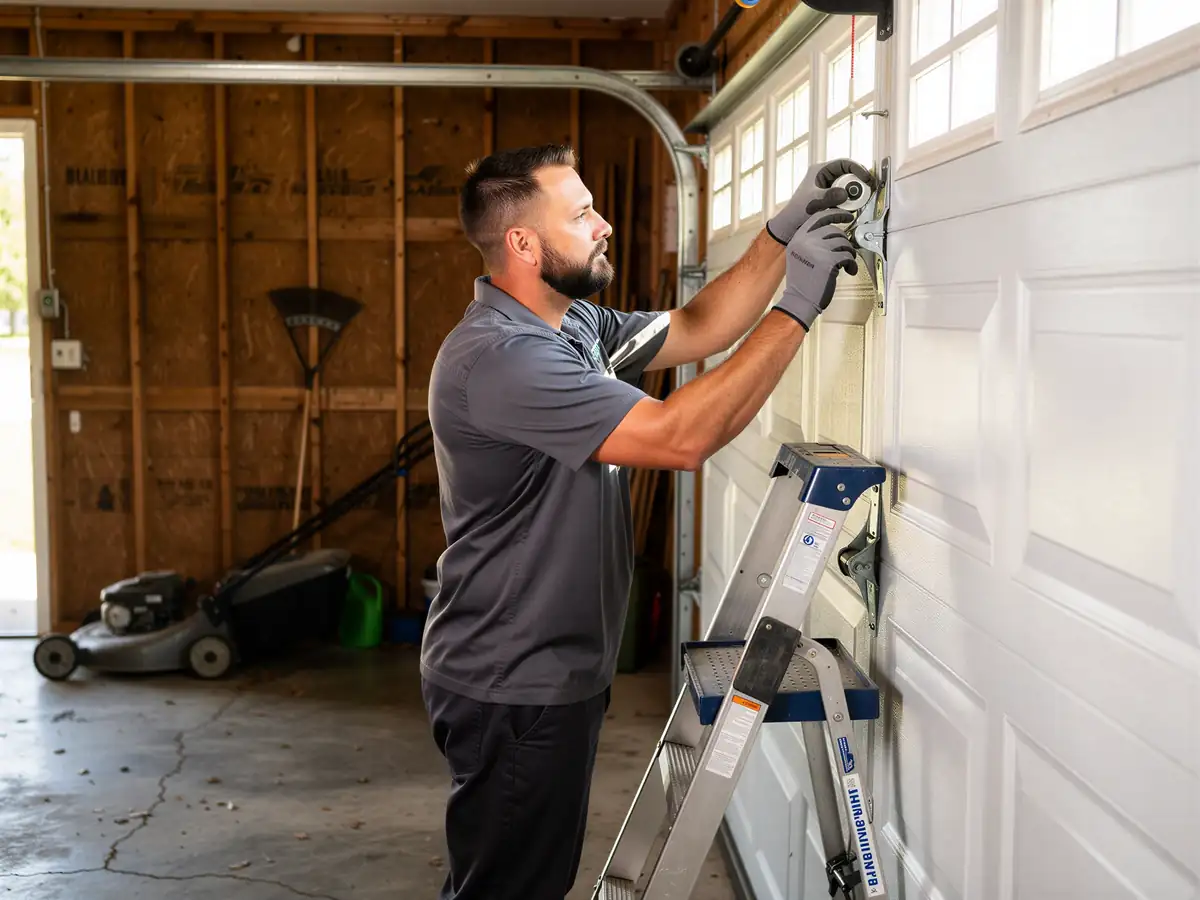
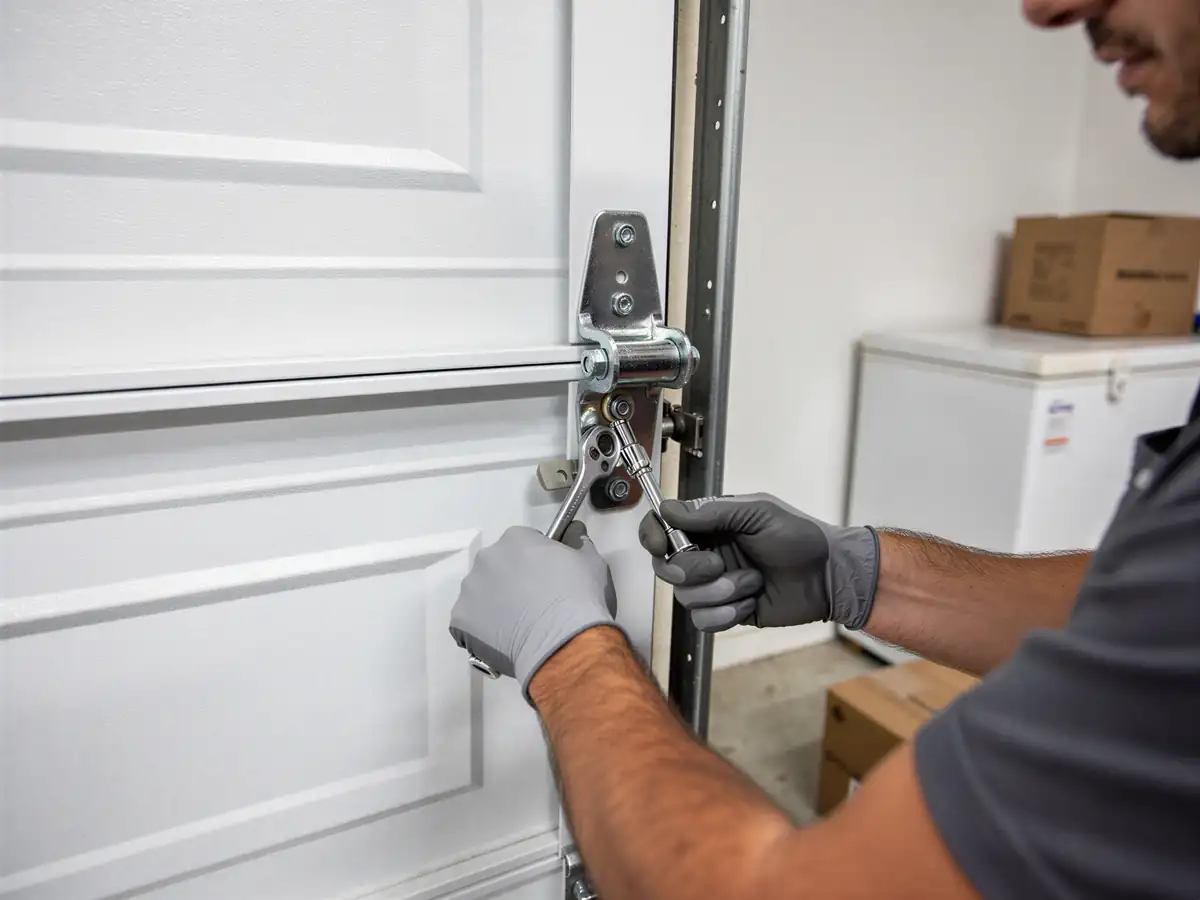
For a broken torsion spring, the job is pulling the old spring (or springs, on a double door), checking the shaft and bearing plates for wear
And installing a replacement matched to your door's weight and the drum size on your specific hardware. On a lot of these older El Cajon installs, the original torsion tube and center bearing are worn enough that we replace those too rather than put a new spring on an old shaft - patching one part and leaving the rest tired just means another call in a year or two.
If the symptom is sagging or binding instead of a dead stop
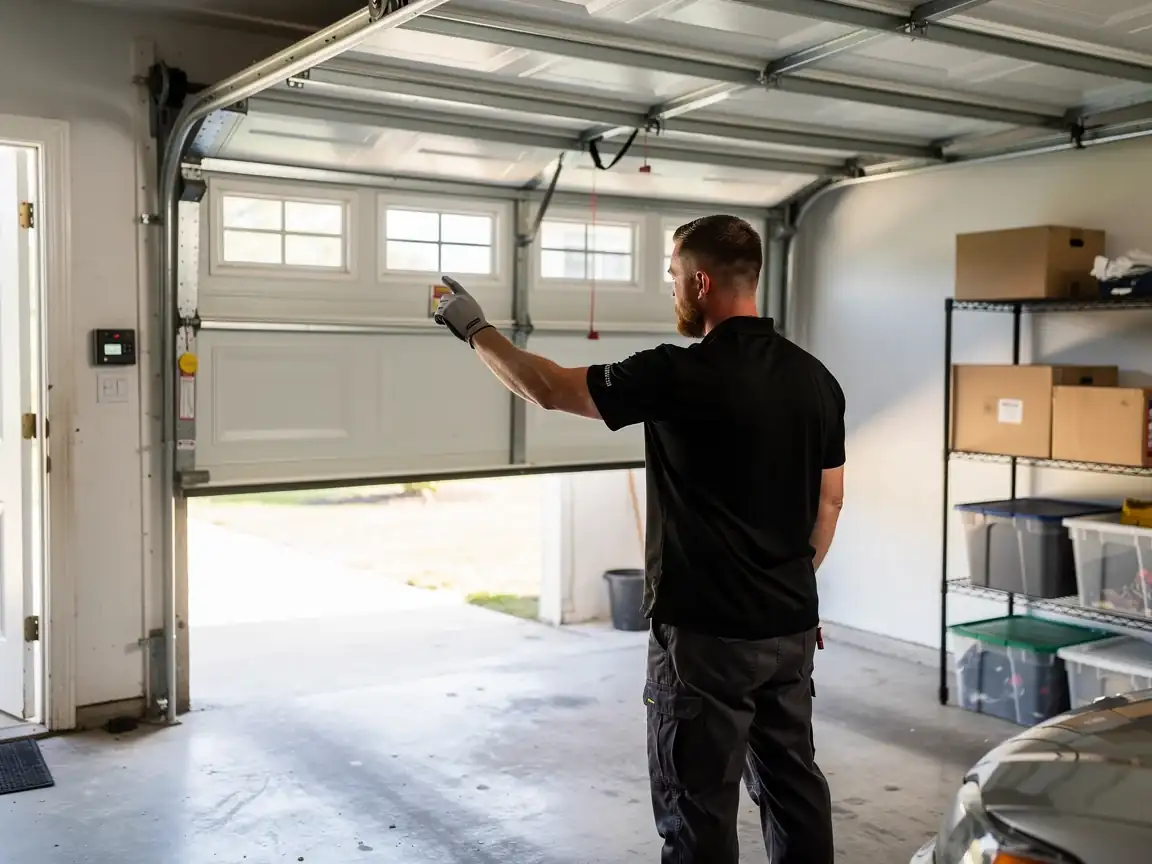
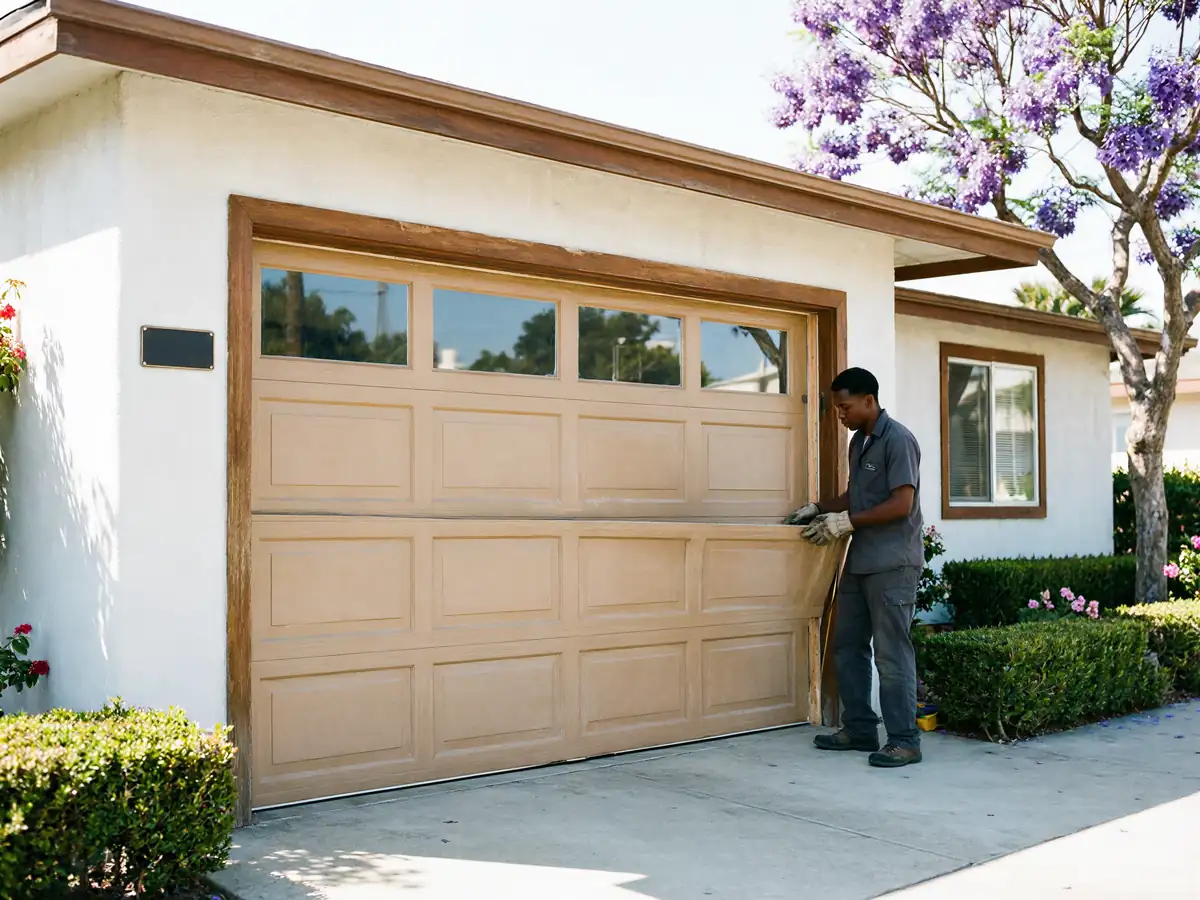
We're usually looking at track alignment, worn rollers, or a bent panel from years of use. We check the track brackets against the frame, because on older construction the wood jamb behind the track can have shifted slightly over the decades, which throws the whole door out of square even with new hardware.
We test the balance by hand once the new springs are set
A properly balanced door should hold steady at waist height when disconnected from the opener. If it drifts up or down, something's still off, and we adjust before we call the job done.
Can You Do This Yourself
Lubricating hinges and rollers, tightening loose bolts on the track brackets, and clearing the photo-eye sensors - all of that is reasonable for an owner to handle. It's cheap, it takes ten minutes, and it extends the life of the hardware you've got.
Torsion spring replacement is not something to take on yourself. These springs store enough energy to cause a serious injury if they release while you're working near them, and the winding bars and clamps involved aren't something most households own or have used before. This is the one honest limit we'll name here: we won't talk you through a spring swap over the phone, and we'd rather you call than try it solo, even if that means paying for a visit instead of a free afternoon fix.
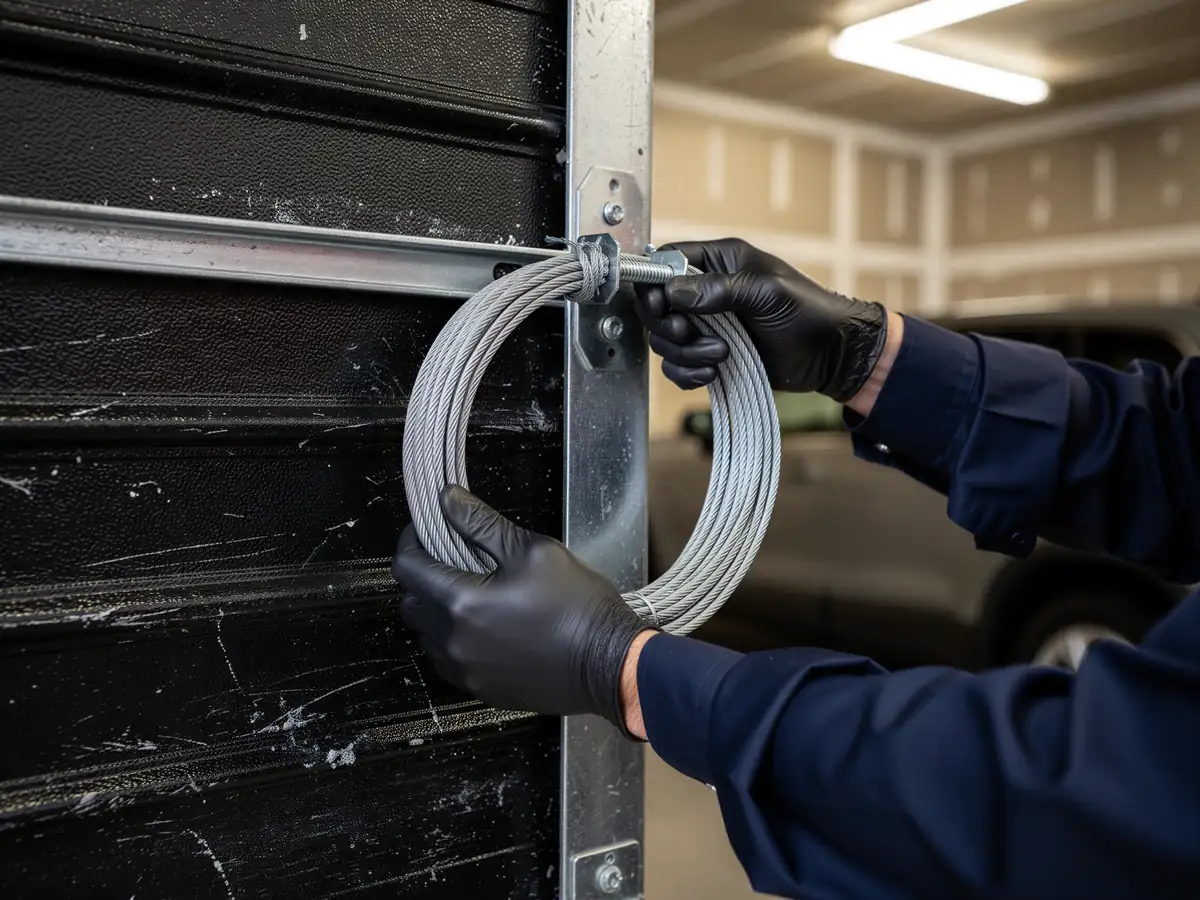
If your door is original to a house built in that 1967-1992 window and you're hearing new noises, it's worth having someone look at the whole system - track, bearings, cables - rather than just swapping the one part that finally gave out.